TIN VĂN TRÊN
ART2ALL
Album
PB Summer [Al, trang trong]
Note: Tin Văn, Jan
30, 2004 *
Making
America
Tạo Dựng Nước Mỹ
Lucy Carlyle
đọc
lê thi diem thúy
The Gangster
We Are All Looking For.
Tên Găng Tơ Mà Tất Cả Chúng Ta Tìm.
Nhà xb Picador, 160 trang,
12.99 Anh Kim [Anh]
Nhà
xb Knopf [Mỹ], 18 US
Trước khi The Gangster We Are
All Looking For được xb tại Mỹ vào năm 2001, lê thi diem thúy
là một nghệ sĩ trình diễn có tiếng trong giới kịch
nghệ, với những tác phẩm mang tính tư tưởng, tự thuật. Qua
những tác phẩm như Red Fiery Summer và the bodies between us
[hiện đương được chuyển thành tiểu thuyết], bà đào sâu,
khai phá những đề tài như chiến tranh, tính thực dân
đô hộ về văn hóa, hồi ức, và căn cước từng cá nhân
[identity], dựa vào kinh nghiệm trẻ thơ của bà, như là
một cô gái, bị bứng ra khỏi Việt Nam và trồng lại ở Mỹ.
Với The Gangster, bà chuyển những mầy mò khám phá có tính riêng tư, thầm kín,
về những liên hệ giữa Á Châu và Tây Phương,
thành thể văn hư cấu. [The Gangster đã từng xuất hiện trong
“Những tiểu luận hay nhất của Mỹ trong năm 1997”. CTND]
Như tác giả, nhân vật kể chuyện ở trong The Gangster là
một bé gái rời Việt Nam trên một con thuyền cùng
với bố, định cư tại miền nam tiểu bang California ở Mỹ, bà mẹ sau
đó cũng tới đây sống với họ. Cuốn sách dựa trên
kinh nghiệm riêng của thúy, kể những gì xẩy ra sau cuộc
dời đổi – tái định cư, từ một nơi ăn chốn ở không đuợc thoải
mái, tới một nơi ăn chốn ở khác, sự chưng hửng nơi đất lạ,
và nỗi lo sợ tai ương có thể bùng nổ bất cứ lúc
nào, ở trong gia đình, vì những cấu xé, trì
chiết với chính nó.
Bằng con mắt của một bé gái, và của một cái
tôi, một bản ngã, đang phát triển, của một bé
gái tị nạn, thuý chuyển những chi tiết vụn vặt của cuộc sống
tại tiểu bang California ở Mỹ, thành niềm bí ẩn, và
sự ngỡ ngàng.
Chúng
tôi ngồi trước mớ giầy chưng diện, đẹp đẽ, bóng loáng
của Ken, đôi nào đôi nấy mỗi đôi mỗi kiểu, mỗi
đôi mỗi góc, như thể
người mang giầy thì đã tuột ra khỏi, trong khi giầy, do nặng
nề không thể theo, nên bị bỏ lại.
Bằng những kiểu giải thích lầm lạc mang tính
tưởng tượng như thế, nước Mỹ trở thành một cái gì khác
chính nó: không phải Mỹ, không phải Việt Nam,
nhưng mà là một nơi chốn của sự lạng quạng, trật chìa,
trục trặc [a place of dislocation], của xa lạ thái quá, và
của bí ẩn. Nhưng thuý, đẩy sự không thể làm sao
giải thích này, về phía gia đình của mình.
Cô tưởng tượng, những người qua đường đã nhìn như thế
nào về gia đình của cô, nhân một lần đi siêu
thị quá khuya: “Gia đình này chẳng mua sắm gì
hết và rời siêu thị ít phút sau, trước 1 giờ
sáng, sau khi đứa bé, có lẽ là con gái
của họ, nằm giữa lối đi ở khu bán gia vị, trong khi người đàn
ông thì mê mẩn với đủ thứ chai lọ, bao bì đựng
các loại muối ăn.”
Nếu gia đình này làm cho nước Mỹ trở thành
xa lạ, thì cũng có thể nói ngược lại, như thế, nghĩa
là, chính nước Mỹ đã biến những người trong gia đình
này thành những kẻ lạ, trong tiến trình “mày làm
tao sao, thì tao làm mày y hệt như vậy” [a process of
mutual alienation].
Trong khi suy nghĩ về bản chất của sự xa lạ - của cả hai, một bên
là xứ sở thâu nhận họ, và một bên là những
người mới tới - người kể chuyện chuyên chở, không chỉ sự giải
thích cuộc sống Tây Phương, của một người ở bên ngoài
cuộc sống đó, mà còn một hiểu biết thật ngỡ ngàng
của cô, về cha mẹ của mình. Cô để ý, với con mắt
gần như không muốn can thiệp vô, hay xâm phạm tới, sự
kiện, mẹ cô cạo trọc đầu, sau một lần cãi lộn với cha cô,
và sau đó đội một cái nón đánh banh;
hay sự kiện này, trong khi coi phim chưởng, mẹ cô thích
thú ngồi rung đùi, và điều này làm cho
cha cô “như phát khùng”, và sau đó, ngồi
cứng ngắc, bất động suốt cả đêm. Cô con gái tin rằng,
mẹ mình ngày xưa là một người ngoan đạo, còn
cha cô, là một tên găng tơ, nhưng
thực hư ra sao, chẳng làm sao biết.
Một phần, như chúng ta thấy, sự thất bại trong việc hiểu biết lẫn
nhau này, là do sự chẳng hứng thú gì, trong
tình yêu [giữa ông bố và bà mẹ], và
một phần, là do tính bí ẩn của tuổi thơ ấu [the myteriousness
of childhood]. Nhưng có thể còn do sự mất mát hồi ức
vì gia đình bị bứng ra khỏi mảnh đất này, đem tới mảnh
đất khác. Sự nhắc nhở không giải thích tới một người
anh hay em trai đã mất khiến chúng ta có thể nghĩ rằng,
có một sự đứt đoạn về lịch sử, trong khi đó, những phản ứng
lớ ngớ của cha mẹ cô gái về những hoàn cảnh thực tế của
cuộc sống Mỹ, điều này như muốn nói lên sự bất bình,
không muốn nhập vào thời điểm hiện tại, cuộc sống hiện thời.
Chẳng thể sở hữu, cái
đã mất, đã qua, cũng như cái đang có, đang cầm
trong tay, điểm xoáy của câu chuyện kể vì vậy cứ thế
đong đưa giữa quá khứ và hiện tại, và cũng thế là
nhân vật chính, đong đưa giữa thế giới trong nhà, và
thế giới bên ngoài. Cùng lúc….
Và cả hai đứa chúng
tôi đều tin rằng còn nhiều độc giả khác nữa, không
thể quên cái xen anh chàng Tự Học [L' Autodidacte] bị tay quản thủ
thư viện người Corse đánh cho sặc máu mũi, vì cái
tội vẫy gọi nhau làm người, đam mê làm người, say mê
chủ nghĩa nhân bản, trong Buồn Nôn...
- NQT
"Bạn hãy
nói bạn có đọc Sartre không, bạn hãy nói,
bạn có ưa thích Sartre không, tôi sẽ nói
bạn là ai." -
HPA:
Jean-Paul Sartre [trong Những Không Gian & Khoảnh Khắc Văn Chương,
nhà xb Hội Nhà Văn 1999]
Lexington:
A blot against America
But Donald Trump’s ill-fated policy
of caging children will hurt his party more than him
Nhưng chính sách bịnh hoạn [ill-fated; yểu mệnh] nhốt
trẻ con vô chuồng sẽ làm tổn thương đảng của Trump hơn là
Trump
https://www.economist.com/united-states/2018/06/23/a-blot-against-america
But
Donald Trump’s ill-fated policy of caging children will hurt his party
more than him

Note: Tờ này giật tít, cực độc.
Lần Lú lên đỉnh vinh quang, sau khi nhổ được cái
gai Anh Ba X: Đại Hội của loài bò sát.
Trên Tin Văn có copy bài viết này, để
coi lại, rồi trình độc giả.
Nhưng cái tít này, có thể chôm
Tin Văn, và Tin Văn thì chôm của Améry.
Ông Thánh Lò Thiêu, phán, ta mang
gánh nặng Lò Thiêu, đâu phải cả lò Đức.
(1)
Câu của NKT, The Economist quá dã man,
khi, chính Trump, gốc gác di dân, bị “đất mẹ” tống
đi lưu dầy, vì thành tích bất hảo - nước Úc
được thành lập, là theo kiểu này. Tờ Harper’s khui
vụ này, trên Tin Văn post lại.
Tên Trump đau có đau bằng cả nước Mẽo đau, “được, được!”
[Tờ NKT dùng từ "đảng" của Trump. Gấu tố thêm.]
Ta mang gánh nặng Cái Ác Bắc Kít, đâu
phải lũ Bắc Kít!
Sao mi thù Bắc Kít đến mức khốn nạn như thế, chồng
ta là Bắc Kít… ?
Hà, hà!
Sorry!
(1)
http://tanvien.net/TG_TP/Jean_Amery.html
Moi, je traine le fardeau de la faute collective,
dis-je, pas eux.
Jean Améry viết, trong Vượt quá tội ác và
hình phạt, Par-delà le
crime et le châtiment.
Gấu cũng có thể nói
như thế:
Ta mang cái gánh nặng của Cái Ác Bắc
Kít, đâu phải lũ Bắc Kít?
http://www.nybooks.com/daily/2018/…/20/tales-from-the-gulag/
Kolyma Stories is a collection of short stories inspired by the
fifteen years that Varlam Shalamov (1907–1982) spent as a prisoner in
the Soviet Gulag. Shalamov did six years of slave labor in the gold mines
of Kolyma before gaining a more tolerable position as a paramedic in the
prison camps. He began writing his account of life in Kolyma after Stalin’s
death in 1953.
—The Editors
TRAMPLING THE SNOW
How do you trample a road through virgin snow? One man walks ahead,
sweating and cursing, barely able to put one foot in front of the other,
getting stuck every minute in the deep, porous snow. This man goes a
long way ahead, leaving a trail of uneven black holes. He gets tired,
lies down in the snow, lights a cigarette, and the tobacco smoke forms
a blue cloud over the brilliant white snow. Even when he has moved on,
the smoke cloud still hovers over his resting place. The air is almost
motionless. Roads are always made on calm days, so that human labor is not
swept away by wind. A man makes his own landmarks in this unbounded snowy
waste: a rock, a tall tree. He steers his body through the snow like a
helmsman steering a boat along a river, from one bend to the next.
The narrow, uncertain footprints he leaves are followed by five
or six men walking shoulder to shoulder. They step around the footprints,
not in them. When they reach a point agreed on in advance, they turn around
and walk back so as to trample down this virgin snow where no human foot
has trodden. And so a trail is blazed. People, convoys of sleds, tractors
can use it. If they had walked in single file, there would have been
a barely passable narrow trail, a path, not a road: a series of holes
that would be harder to walk over than virgin snow. The first man has the
hardest job, and when he is completely exhausted, another man from this
pioneer group of five steps forward. Of all the men following the trailblazer,
even the smallest, the weakest must not just follow someone else’s footprints
but must walk a stretch of virgin snow himself. As for riding tractors or
horses, that is the privilege of the bosses, not the underlings.
1956
CONDENSED MILK
Hunger made our envy as dull and feeble as all our other feelings.
We had no strength left for feelings, to search for easier work, to walk,
to ask, to beg. We envied only those we knew, with whom we had come
into this world, if they had managed to get work in the office, the
hospital, or the stables, where there were no long hours of heavy physical
work, which was glorified on the arches over all the gates as a matter
for valor and heroism. In a word, we envied only Shestakov.
Only something external was capable of taking us out of our indifference,
of distracting us from the death that was slowly getting nearer. An external,
not an internal force. Internally, everything was burned out, devastated;
we didn’t care, and we made plans only as far as the next day.
Now, for instance, I wanted to get away to the barracks, lie down
on the bunks, but I was still standing by the doors of the food shop.
The only people allowed to buy things in the shop were those convicted
of nonpolitical crimes, including recidivist thieves who were classified
as “friends of the people.” There was no point in our being there, but
we couldn’t take our eyes off the chocolate-colored loaves of bread; the
heavy, sweet smell of fresh bread teased our nostrils and even made our
heads spin. So I stood there looking at the bread, not knowing when I would
find the strength to go back to the barracks. That was when Shestakov called
me over.
I had gotten to know Shestakov on the mainland, in Moscow’s Butyrki
prison. We were in the same cell. We were acquaintances then, not friends.
When we were in the camps, Shestakov did not work at the mine pit face.
He was a geological engineer, so he was taken on to work as a prospecting
geologist, presumably in the office. The lucky man barely acknowledged
his Moscow acquaintances. We didn’t take offense—God knows what orders
he might have had on that account. Charity begins at home, etc.
“Have a smoke,” Shestakov said as he offered me a piece of newspaper,
tipped some tobacco into it, and lit a match, a real match.
I lit up.
“I need to have a word with you,” said Shestakov.
“With me?”
“Yes.”
We moved behind the barracks and sat on the edge of an old pit
face. My legs immediately felt heavy, while Shestakov cheerfully swung
his nice new government boots—they had a faint whiff of cod-liver oil.
His trousers were rolled up, showing chessboard-patterned socks. I surveyed
Shestakov’s legs with genuine delight and even a certain amount of pride.
At least one man from our cell was not wearing foot bindings instead of
socks. The ground beneath us was shaking from muffled explosions as the
earth was being prepared for the night shift. Small pebbles were falling
with a rustling sound by our feet; they were as gray and inconspicuous as
birds.
“Let’s move a bit farther,” said Shestakov.
“It won’t kill you, no need to be afraid. Your socks won’t be
damaged.”
“I’m not thinking about my socks,” said Shestakov, pointing his
index finger along the line of the horizon. “What’s your view about
all this?”
“We’ll probably die,” I said. That was the last thing I wanted
to think about.
“No, I’m not willing to die.”
“Well?”
“I have a map,” Shestakov said in a wan voice. “I’m going to take
some workmen—I’ll take you—and we’ll go to Black Springs, fifteen kilometers
from here. I’ll have a pass. And we can get to the sea. Are you willing?”
He explained this plan in a hurry, showing no emotion.
“And when we reach the sea? Are we sailing somewhere?”
“That doesn’t matter. The important thing is to make a start.
I can’t go on living like this. ‘Better to die on one’s feet than live
on one’s knees,’” Shestakov pronounced solemnly. “Who said that?”
Very true. The phrase was familiar. But I couldn’t find the strength
to recall who said it and when. I’d forgotten everything in books. I didn’t
believe in bookish things. I rolled up my trousers and showed him my red
sores from scurvy.
“Well, being in the forest will cure that,” said Shestakov, “what
with the berries and the vitamins. I’ll get you out, I know the way.
I have a map.”
I shut my eyes and thought. There were three ways of getting from
here to the sea, and they all involved a journey of five hundred kilometers,
at least. I wouldn’t make it, nor would Shestakov. He wasn’t taking me
as food for the journey, was he? Of course not. But why was he lying? He
knew that just as well as I did. Suddenly I was frightened of Shestakov,
the only one of us who’d managed to get a job that matched his qualifications.
Who fixed him up here, and what had it cost? Anything like that had to
be paid for. With someone else’s blood, someone else’s life.
“I’m willing,” I said, opening my eyes. “Only I’ve got to feed
myself up first.”
“That’s fine, fine. I’ll see you get more food. I’ll bring you
some . . . tinned food. We’ve got lots. . . .”
There are lots of different tinned foods—meat, fish, fruit, vegetables—but
the best of all is milk, condensed milk. Condensed milk doesn’t have
to be mixed with boiling water. You eat it with a spoon, or spread it on
bread, or swallow it drop by drop from the tin, eating it slowly, watching
the bright liquid mass turn yellow with starry little drops of sugar forming
on the can. . . .
“Tomorrow,” I said, gasping with joy, “tinned milk.”
“Fine, fine. Milk.” And Shestakov went off.
I returned to the barracks, lay down, and shut my eyes. It was
hard to think. Thinking was a physical process. For the first time I saw
the full extent of the material nature of our psyche, and I felt
its palpability. Thinking hurt. But thinking had to be done. He was going
to get us to make a run for it and then hand us in: that much was completely
obvious. He would pay for his office job with our blood, my blood. We’d
either be killed at Black Springs, or we’d be brought back alive and given
a new sentence: another fifteen years or so. He must be aware that getting
out of here was impossible. But milk, condensed milk. . . .
I fell asleep and in my spasmodic hungry sleep I dreamed of Shestakov’s
can of condensed milk: a monstrous tin can with a sky-blue label.Enormous,
blue as the night sky, the can had thousands of holes in it and milk
was oozing out and flowing in a broad stream like the Milky Way. And I
had no trouble reaching up to the sky to eat the thick, sweet, starry milk.
I don’t remember what I did that day or how I worked. I was waiting
and waiting for the sun to sink in the west, for the horses to start
neighing, for they were better than people at sensing that the working
day was ending.
The siren rang out hoarsely; I went to the barracks where Shestakov
lived. He was waiting for me on the porch. The pockets of his quilted
jacket were bulging.
We sat at a big, scrubbed table in the barracks, and Shestakov
pulled two cans of condensed milk out of a pocket.
I used the corner of an ax to pierce a hole in one can. A thick
white stream flowed onto the lid and onto my hand.
“You should have made two holes. To let the air in,” said Shestakov.
“Doesn’t matter,” I said, licking my sweet dirty fingers.
“Give us a spoon,” Shestakov asked, turning to the workmen who
were standing around us. Ten shiny, well-licked spoons were stretched
over the table. They were all standing to watch me eat. That wasn’t for
lack of tact or out of any hidden desire to help themselves. None of them
even hoped that I would share this milk with them. That would have been unprecedented;
any interest in what someone else was eating was selfless. I also knew
that it was impossible not to look at food disappearing into someone else’s
mouth. I made myself as comfortable as I could and consumed the milk without
bread, just washing it down occasionally with cold water. I finished the
two cans. The spectators moved away; the show was over. Shestakov looked
at me with sympathy.
“You know what,” I said, carefully licking the spoon. “I’ve changed
my mind. You can leave without me.”
Shestakov understood me and walked out without saying a thing.
This was, of course, a petty revenge, as weak as my feelings.
But what else could I have done? I couldn’t warn the others: I didn’t
know them. But I should have warned them: Shestakov had managed to persuade
five others. A week later they ran off; two were killed not far from Black
Springs, three were tried a month later. Shestakov’s own case was set
aside in the process, and he was soon moved away somewhere. I met him
at another mine six months later. He didn’t get an additional sentence
for escaping. The authorities had used him but had kept to the rules.
Things might have been different.
He was working as a geological prospector, he was clean-shaven
and well-fed, and his chess-pattern socks were still intact. He didn’t
greet me when he saw me, which was a pity. Two tins of condensed milk
was not really worth making a fuss about, after all.
1956
—translated by Donald Rayfield
Gignoux: The Siberian Gulag, 1931
Before our human dream (or terror) wove
Mythologies, cosmogonies, and love,
Before time coined its substance into days,
The sea, the always sea, existed: was.
Who is the sea? Who is that violent being,
Violent and ancient, who gnaws the foundations,
Of earth? He is both one and many oceans;
He is abyss and splendor, chance and wind.
Who looks on the sea, sees it the first time,
Every time, with the wonder distilled
From elementary things-from beautiful
Evenings, the moon, the leap of a bonfire.
Who is the sea, and who am I? The day
That follows my last agony shall say.
[ Trans. John Updike]
I think this poem should be good since the subject is the sea.
The sea has been haunting poetry ever since Homer, and in English poetry
the sea has been there since earliest times. You find it in the first
verses of Beowulf, when we are told of the ship of Scyld, the king of Denmark.
Then they sent him out to sea in a ship. Then the writer says they sent
him to travel far on the power of the sea. And the sea has been always with
us. The sea is far more mysterious than the earth. And I don't think you
can speak of the sea without the memory of that first chapter of Moby Dick.
Therein he felt the mystery of the sea. What have I done? I have merely tried
to rewrite those ancient poems about the sea. I think back to Carnoes of
course-Por mares nunca de antes navegades "O seas never sailed before"-to
The Odyssey, to ever so many seas. The sea is haunting us all the time. It
is still mysterious to us. We do not know what it is or, as I say in the
poem, who he is, since we do not know who we are. That is another mystery.
I have written many poems about the sea. This one may perhaps be worth your
attention. I don't think I can say anything more, since this poem is not
intellectual. That's all to the good. This poem arises from emotion, so
it shouldn't be too bad.
1904: London
THE OLD MEN ADMIRING
THEMSELVES IN THE WATER
I heard the old, old men say,
"Everything alters,
And one by one we drop away."
They had hands like claws, and their knees
Were twisted like the old thorn-trees
By the waters.
I heard the old, old men say,
"All that's beautiful drifts away
Like the waters."
William Butler Yeats, from In the Seven Woods. The Irish poet
was in his thirties when he wrote
this short verse, though it was not, even then, his earliest
work concerned with growing older. 'My first denunciation of old age,"
he later wrote to Olivia Shakes pear, came "before I was twenty." In 1922,
when the Irish Free State was founded, Yeats accepted an invitation to
serve in its senate. The following year he was awarded the Nobel Prize
in Literature.
http://tanvien.net/Viet/rain.html
THE RAIN
When my older brother
came back from war
he had on his forehead a little silver star
and under the star
an abyss
a splinter of shrapnel
hit him at Verdun
or perhaps at Grunwald
(he'd forgotten the details)
He used to talk much
In many languages
But he liked most of all
The language of history
until losing breath
he commanded his dead pals to run
Roland Kowalski Hannibal
he shouted
that this was the last crusade
that Carthage soon would fall
and then sobbing confessed
that Napoleon did not like him
we looked at him
getting paler and paler
abandoned by his senses
he turned slowly into a monument
into musical shells of ears
entered a stone forest
and the skin of his face
was secured
with the blind dry
buttons of eyes
nothing was left him
but touch
what stories
he told with his hands
in the right he had romances
in the left soldier's memories
they took my brother
and carried him out of town
he returns every fall
slim and very quiet
he does not want to come in
he knocks at the window for me
we walk together in the streets
and he recites to me
improbable tales
touching my face
with blind fingers of rain
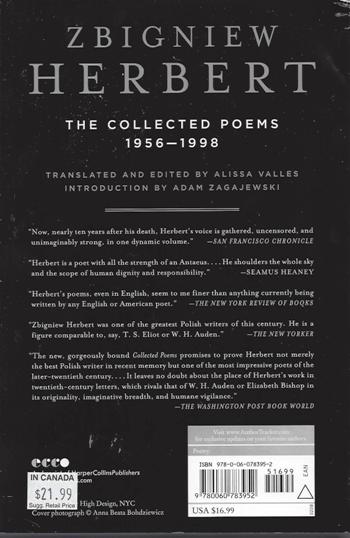
Zbigniew Herbert: The Collected Poems 1956-1998
Mưa
Khi ông anh của tớ từ mặt
trận trở về
Trán của anh có 1 ngôi sao bạc nho nhỏ
Và bên dưới ngôi sao
Một vực thẳm
Một mảnh bom
Đụng anh ở Plê Ku
Hay, có lẽ, ở Củ Chi
(Anh quên những chi tiết)
Anh trở thành nói
nhiều
Trong nhiều ngôn ngữ
Nhưng anh thích nhất trong tất cả
Ngôn ngữ lịch sử
Đến hụt hơi,
Anh ra lệnh đồng ngũ đã chết, chạy
Nào anh Núp,
Nào anh Trỗi.
Anh la lớn
Trận đánh này sẽ là trận chiến thần thánh
chót
[Mỹ Kút, Ngụy Nhào, còn kẻ thù
nào nữa đâu?]
Rằng Xề Gòn sẽ vấp ngã,
Sẽ biến thành Biển Máu
Và rồi, xụt xùi, anh thú nhận
Bác Hồ, lũ VC Bắc Kít đếch ưa anh.
[Hà, hà!]
Chúng tôi nhìn
anh
Ngày càng xanh mướt, tái nhợt
Cảm giác bỏ chạy anh
Và anh lần lần trở thành 1 đài tưởng niệm
liệt sĩ
Trở thành những cái
vỏ sò âm nhạc của những cái tai
Đi vô khu rừng đá
Và da mặt anh
Thì được bảo đảm bằng những cái núm mắt
khô, mù
Anh chẳng còn gì
Ngoại trừ xúc giác
Những câu chuyện gì,
anh kể
Với những bàn tay của mình.
Bên phải, những câu chuyện tình
Bên trái, hồi ức Anh Phỏng Giái
Chúng mang ông anh
của tớ đi
Đưa ra khỏi thành phố
Mỗi mùa thu anh trở về
Ngày càng ốm nhom, mỏng dính
Anh không muốn vô nhà
Và đến cửa sổ phòng tớ gõ
Hai anh em đi bộ trong
những con phố Xề Gòn
Và anh kể cho tớ nghe
Những câu chuyện chẳng đâu vào đâu
Và sờ mặt thằng em trai của anh
Với những ngón tay mù,
Của mưa
Zbigniew Herbert
(1924-1998)
Born in Lvov, a city that after 1945 was incorporated into
the Soviet Union, Zbigniew Herbert led a difficult life of an eternal
and itinerant student until 1956, when his first collection of poems finally
appeared. As a young man, he hesitated between poetry, art history, and
philosophy. His life remained peripatetic even after 1956, an important
year for Poland as it marked the end to the excesses of Stalinist cultural
policy. Herbert lived then in Warsaw, Paris, Berlin, Italy, and the United
States (he taught for a year at the University of California, Los Angeles).
He was driven to travel by his immense appetite for the ancient and modern
beauty that is scattered throughout the museums, architecture, and landscapes
of western and southern Europe, food for his imagination. Herbert invented
a new tone in poetry, a music filled with tragedy, irony, and goodness. His
"Mr. Cogito," the speaker in many of his poems, is a brilliant and sometimes
melancholy commentator on twentieth-century madness. Herbert's poems turned
out to be readily translatable, so he found a home for his brilliance in
other languages as well (especially in English, German, and Swedish). Still,
he never enjoyed a Goethean peace of mind, tormented by sickness and bad
luck, he became a beloved and nationally worshipped poet only posthumously.
Henryk Elzenberg, one of young Herbert's masters, is the addressee in letters
that follow. Elzenberg was an independent philosopher and a sage.
Adam Zagajewski: Polish writers on writing
Ba Lan Tam Kiệt - Szymborska, Milosz, Herbert - hai đấng
được Nobel, trong khi Herbert, bảnh nhất, lại không được. Cái
gì làm ông quá cả… Nobel?
Theo GCC, thơ của Herbert vượt được ngưỡng Nobel. Đọc AZ phán
về ông, là nhận ra. Còn điều này, Herbert chưa
từng phải bỏ nước ra đi, như Szymsborka, nhưng hơn cả Szymborka, ông
chưa hề 1 lần bị cái bả CS quyến rũ. Khó lắm đấy, cú
này, theo GCC.
Sinh ở Lvov, thành phố sau 1945 bị nhập vào Liên
Xô, Herbert sống cuộc đời khó khăn của 1 sinh viên.
“miên viễn, và lưu động”, cho tới năm 1956, khi tuyển tập
thơ đầu tiên của ông, sau cùng xuất hiện. Khi
còn trẻ, ông lưỡng lự giữa thơ, lịch sử nghệ thuật và
triết học. Đời của ông là 1 đời tiêu dao, ngay cả sau
1956, 1 năm quan trọng đối với Ba Lan, vì nó đánh
dấu chấm hết sự thái quá của chính sách văn
hóa Xì ta lin nít. Herbert từ đó sống ở Warsaw,
Paris, Berlin, Italy, và Mẽo (ông dạy 1 năm ở Đại Học California,
Los Angeles). Ông mê du lịch, bởi nỗi thèm thuồng bao
la của mình, bởi cái đẹp cổ đại và hiện đại rải rác
dàn trải qua những viện bảo tàng, kiến trúc, và
phong cảnh của Tây Âu, Nam Âu, thức ăn của sự tưởng
tượng của ông
Herbert phịa ra 1 giọng mới cho thơ, 1 âm nhạc tẩm đẫm bi kịch,
hài hước, và cái tốt. Mr. Cogito, phát ngôn
viên trong nhiều bài thơ của ông, là 1 tay “còm”
thông minh, sáng chói, và đôi lúc
buồn bã, về cái điên khùng của thế kỷ 20. Thơ
của Herbert, hóa ra là luôn sẵn sàng để được dịch,
vì thế ông còn kiếm ra nhà, cho cái sự
thông minh sáng rỡ của mình, ở trong những ngôn
ngữ khác, (đặc biệt là trong tiếng Anh, Đức. và Thụy
Điển). Tuy nhiên, ông không làm sao enjoy 1 sự bình
an trong tâm hồn theo kiểu của Goethe, (do bị) dằn vặt, bởi bịnh hoạn
và vận xấu, ông trở thành một nhà thơ được yêu
mến và được thế giới ngưỡng vọng, chỉ sau khi chết.
AZ, người biện tập tuyển tập Những nhà văn Balan bàn về
viết, thay vì giới thiệu thơ Herbert, thì là những thư
từ trao đổi giữa Herbert và người nhận thư, Henryk Elzenberg, là
1 trong những sư phụ trẻ của trường phái Herbert, một triết gia độc
lập và hiền giả
Tin Văn post 1 đoạn, trong 1 cuộc trò chuyện, giữa hai tác
giả trên, và, có thể, khi đọc, chúng ta mường
tượng ra câu trả lời của TTT, khi ông không "viết lại,
lại viết", re-écrire.
RG: Could you define your poetry in one sentence?
ZH: When a person decides to take the frightening step of publishing,
he has no idea what the consequences will be for his life, for his health.
Writing, painting (I might not include music) leave
their mark on the soul. They make it either better or worse, but never
leave it indifferent. Here my younger colleagues will say: "He's all right,
he got prizes, he's sitting in Paris and giving us advice." Nevertheless
it is choosing danger, choosing fate, a more difficult life. I would
like what I write to be the reflection of some human life- unimportant,
undistinguished, mine - and through that the life of my generation, my relation
to my elders, to my masters. That is a duty of continuity and - apart from
my terrible character flaws - a duty of fidelity. Oh, that's what I would
say, that my poetry is about fidelity; in general it is about a certain virtue
of endurance, of affirming life in all its complexity. And I still hope that
one day when I see that I'm slipping on the page, I will have the courage
to say to myself: "No thanks, I step down." There's that eternal question
of Mauriac's: why did Rimbaud stop writing? Well, because he had said everything.
Translated by Alissa Valles
Well, because he had said everything.
Đặng Tiến, khi viết về TTT, dùng chữ tiết tháo. Herbert,
dùng chữ trung thực, fidelity, a certain virtue of endurance, of
accepting life…
Note: Bài tưởng niệm Herbert của Hass, cũng thật tuyệt. Nhưng
bài tuyệt nhất, là bài giới thiệu tuyển tập thơ Herbert,
của AZ, theo GCC
AUGUST 16 [1998]
In Memoriam: Zbigniew Herbert
Zbigniew Herbert
died a few weeks ago in Warsaw at the age of seventy-three. He is one of
the most influential European poets of the last half century, and perhaps-even
more than his great contemporaries Czeslaw Milosz and Wladislawa Szymborska-the
defining Polish poet of the post-war years.
It's hard to know how to talk about him, because
he requires superlatives and he despised superlatives. He was born in Lvov
in 1924. At fifteen, after the German invasion of Poland, he joined an underground
military unit. For the ten years after the war when control of literature
in the Polish Stalinist regime was most intense, he wrote his poems, as
he said, "for the drawer." His first book appeared in 1956. His tactic, as
Joseph Brodsky has said, was to turn down the temperature of language until
it burned like an iron fence in winter. His verse is spare, supple, clear,
ironic. At a time when the imagination was, as he wrote, "like stretcher bearers
lost in the fog," this voice seemed especially sane, skeptical, and adamant.
He was also a master of the prose poem. Here are some samples:
Zbigniew
Herbert mất vài tuần trước đây, ở Warsaw thọ 73 tuổi. Ông
là 1 trong những nhà thơ Âu Châu, ảnh hưởng nhất
trong nửa thế kỷ, và có lẽ - bảnh hơn nhiều, so với ngay cả
hai người vĩ đại, đã từng được Nobel, đồng thời, đồng hương với ông,
là Czeslaw Milosz và Wladislawa Szymborska - nhà
thơ định nghĩa thơ Ba Lan hậu chiến.
Thật khó mà biết làm thế nào nói
về ông, bởi là vì ông đòi hỏi sự thần sầu,
trong khi lại ghét sự thần sầu. Ông sinh tại Lvov năm 1924. Mười
lăm tuổi, khi Đức xâm lăng Ba Lan, ông gia nhập đạo quân
kháng chiến. Trong 10 năm, sau chiến tranh, khi chế độ Xì Ta
Lin Ba Lan kìm kẹp văn chương tới chỉ, ông làm thơ, thứ
thơ mà ông nói, “để trong ngăn kéo”. Cuốn đầu tiên của ông, xb năm 1956.
Đòn của ông [his tactic], như Brodsky chỉ cho thấy, là
giảm nhiệt độ ngôn ngữ tới khi nó cháy đỏ như một mảnh
hàng rào sắt, trong mùa đông. Câu thơ
của ông thì thanh đạm, mềm mại, sáng sủa, tếu tếu.
Tới cái lúc, khi mà tưởng tượng, như ông viết,
“như những người khiêng băng ca – trong khi tản thương, [“sơ tán
cái con mẹ gì đó”, hà hà] - mất tích trong sương mù”, thì
tiếng thơ khi đó, mới đặc dị trong lành, mới bi quan, và
mới sắt đá làm sao.Ông
còn là 1 sư phụ của thơ xuôi.
This poetry is about the pain
of the twentieth century, about accepting the cruelty of an inhuman age,
about an extraordinary sense of reality.
And the fact that at the same time the poet loses none of his lyricism
or his sense of humor-this is the unfathomable secret of a great artist.
Thơ này là về nỗi
đau của thế kỷ 20, về chấp nhận cái sự độc ác, tàn bạo,
dã man của thời phi nhân, về cảm quan cực kỳ khác thường
về thực tại. Nhưng, sự kiện, cùng lúc, nhà thơ không
mất đi 1 tí gì của chất trữ tình, hay cái cảm
quan cà chớn, tếu táo, tưng tửng của mình – thì
đó là cái bí mật khủng ơi là khủng của
1 đại nghệ sĩ.
Adam Zagajewski: Introduction
(Translated
by Bill Johnston) (1)
Wislawa Szymborska, a Nobel Prize-winning poet who used the imagery of
everyday objects and a mordant style to explore dramatic themes of human
experience including love, war and death, died Feb. 1 at her home in Krakow,
Poland. She was 88.
Ms. Szymborska shunned the idea of being a political poet, though she
recognized the personal could bleed into the political while living under
a communist regime.
“When I was young, I had a moment of believing in the communist doctrine,”
she told Hirsch in 1996. “I wanted to save the world through communism. Quite
soon, I understood that it doesn’t work, but I’ve never pretended it didn’t
happen to me.
“At the very beginning of my creative life, I loved humanity,” she continued.
“I wanted to do something good for mankind. Soon, I understood that it isn’t
possible to save mankind. There’s no need to love humanity, but there is
a need to like people. Not love, just like. This is the lesson I draw from
the difficult experiences of my youth.”
Nữ thi sĩ Wislawa Szymborska, Nobel văn chương, mất, thọ 88 tuổi. Bà
thường sử dụng hình ảnh những vật dụng đời thường để khai phá
những đề tài thê lương của cõi người, bao gồm tình
yêu, chiến tranh, cái chết. Bà không nghĩ, bà
là nhà thơ chính trị, tuy nhiên theo bà,
chạy trời không khỏi nắng, khi sống dưới chế độ CS.
Khi tôi còn trẻ, đã có lúc tôi
tin vào chủ nghĩa khốn nạn đó, bà nói với thi
sĩ Mẽo Hirsch, vào năm 1966. Tôi muốn kíu thế giới, qua
chủ nghĩa CS. Chẳng mấy chốc tôi nhận ra, vô phương, nhưng tôi
hề chối, đã từng ngu như thế, hà, hà!
Vào lúc rất ư khởi đầu của cái việc viết lách
của tôi, tôi iêu nhân loại, tôi muốn làm
1 điều gì tốt cho nhân loại. Chẳng bao lâu, tôi
nhận ra vô phương kíu nhân loại, và chẳng có
cái yêu cầu iêu nhân loại, nhưng có yêu
kầu, thik nhân noại.
Không phải yêu, mà thik, like, hà, hà!
Chủ nghĩa CS ở xứ Mít theo GCC, không mắc mớ gì tới
chủ nghĩa CS, như những triết gia được coi là những nhà Mác
Học, như Lukacs, Henri Lefebvre, hay Althusser… nghĩ về nó, sống chết
vì nó. Ở Việt Nam, chỉ có mỗi một thằng cha Gấu rất
rành về nó, ngay từ khi vừa mới lớn, là đã đắm
đuối với nó. Đó là sự thực. Gấu chẳng đã từng
kể, thời gian bị VC cho xơi hai trái mìn claymore, ở nhà
hàng nổi Mỹ Cảnh, 1965, trong những giờ phút mấp mé bờ
tử sinh, nơi nhà thương Grall, cuốn sách gối đầu giường của
Gấu là cuốn viết về chủ nghĩa duy vật, cuốn của Henri Lefebvre!
TTT, ông anh của GCC, người được coi là rất rành Mác
Xít, cũng biết 1 thứ Mác Xít qua Raymond Aron, ông
này, triết gia Mác Xít, nhưng không phải là
1 Mác Học, theo GCC.
Phải viết dài dòng như thế, thì bạn đọc mới hiểu,
phát giác khủng khiếp mà Gấu có được, khi đọc
Tolstaya, "Những Thời Ăn Thịt Người", khi vừa đến Trại Tị Nạn Thái
Lan:
Chủ nghĩa CS ở xứ Mít, là quái thai sinh ra từ Cái
Ác Bắc Kít, không mắc mớ gì tới chủ nghĩa CS.
Có thể nói, từ lúc ra đời, 1945, Vẹm, nhập thân
của Cái Ác Bắc Kít, sử dụng bất cứ 1 thứ khi giới nào
tiện dụng, hữu dụng, đối với chúng, để chiếm lấy xứ Mít, làm
của riêng của chúng. Giết sạch những kẻ không theo ta,
vu cho chúng đủ thứ tội ác, nào Việt Gian, tức theo
Tẩy, nào Đệ Tứ, nào Ngụy, theo Mẽo, cốt sao chiếm được cả nước
Mít, chỉ cho chúng!
Tình trạng lúc này, cả nước chống lại chúng,
thì chúng bèn coi cả nước là kẻ thù, cũng
phịa ra đủ thứ tội giáng lên dân Mít, y chang lúc
khởi thuỷ!
Vào thời net, với những phương tiện thông tin tối tân
như You Tube, FB, không có cách chi để bịp bợm, chúng
nói thẳng băng, chúng ông là như thế đó.
Tên Trọng Lú không thèm giấu giếm, Luật An Ninh,
là để bảo vệ chế độ!
Jun 18 at 9:59 AM
nguyên nhân
những con bồ câu. đứng đợi
mẩu bánh mì. được ném. xuống
trời chiều. vàng lụa. đôi mắt. cong
những giọt máu. của đứa con. gái
nhỏ xuống. từ ngón tay. tự cắt
chuyện. từ những ngày. xa xưa
ăn nói. ngớ. ngẩn
tự móc họng. cho ói. mửa
hết những. chất độc
rồi tự bịt kín. mũi
để không phải. hít. thở
cuộc sống. nhiễm độc
từ loài. người
bằng lòng độc. ác
và bằng. sự thông minh
Đài Sử
Bài thơ dưới đây, Gấu đọc lần đầu, cũng lâu lắm
rồi, nay thấy trong cuốn thơ mới mua, tại 1 tiệm sách cũ mới kiếm
thấy, và cũng cảm thấy, như lần đầu đọc: Bài thơ tả cảnh
Gấu trở lại Quán Chùa…
Cafe
Of those at the table in the cafe
where on winter noons a garden of frost glittered on windowpanes
I alone survived.
I could go in there if I wanted to
and drumming my fingers in a chilly void
convoke shadows.
With disbelief I touch the cold marble,
with disbelief I touch my own hand.
It-is, and I-am in ever novel becoming,
while they are locked forever and ever
in their last word, their last glance,
and as remote as Emperor Valentinian
or the chiefs of the Massagetes, about whom I know nothing,
though hardly one year has passed, or two or three.
I may still cut trees in the woods of the far north,
I may speak from a platform or shoot a film
using techniques they never heard of.
I may learn the taste of fruits from ocean islands
and be photographed in attire from the second half of the century.
But they are forever like busts in frock coats and jabots
in some monstrous encyclopedia.
Sometimes when the evening aurora paints the roofs in a poor street
and r contemplate the sky, I see in the white clouds
a table wobhling. The waiter whirls with his tray
and they look at me with a burst of laughter
for I still don't know what it is to die at the hand of man,
they know-they know it well.
Warsaw, 1944
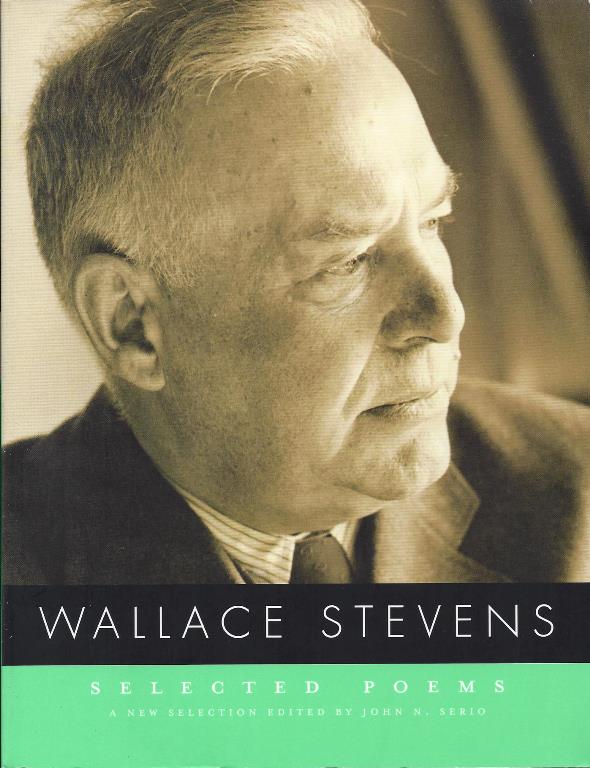
Bài thơ sau đây, trong Wallace Stevens: Selected Poems.
Đấng này, Gấu tìm đọc nhân nghe lời xúi của
bà Thụy Khê Yankee mũi lõ, Helen Vendler!
II
THE WORLD IS LARGER IN SUMMER
He left half a shoulder and half a head
To recognize him in after time.
These marbles lay weathering in the grass
When the summer was over, when the change
Of summer and of the sun, the life
Of summer and of the sun, were gone.
He had said that everything possessed
The power to transform itself, or else,
And what meant more, to be transformed.
He discovered the colors of the moon
In a single spruce, when, suddenly,
The tree stood dazzling in the air
And blue broke on him from the sun,
A bullioned blue, a blue abulge,
Like daylight, with time's bellishings,
And sensuous summer stood full-height.
The master of the spruce, himself,
Became transformed. But his mastery
Left only the fragments found in the grass,
From his project, as finally magnified.
http://www.tanvien.net/new_daily_poetry/Wallace_Stevens.html
THE POEM THAT TOOK THE PLACE OF
A MOUNTAIN
There it was,
word for word,
The poem that
took the place of a mountain.
He breathed its
oxygen,
Even when the
book lay turned in the dust of his table.
It reminded him
how he had needed
A place to go
to in his own direction,
How he had recomposed
the pines,
Shifted the rocks
and picked his way among clouds,
For the outlook
that would be right,
Where he would
be complete in an unexplained completion:
The exact rock
where his inexactnesses
Would discover,
at last, the view toward which they had edged,
Where he could
lie and, gazing down at the sea,
Recognize his
unique and solitary home.
Bài thơ chiếm trái
núi
[Dịch] theo kiểu dùi
đục chấm mắm cáy, “mô tà mô”
[mot-à-mot, word for word]
Thì đúng
là, bài thơ đá đít trái
núi, và chiếm chỗ của nó.
Nó thở không
khí của trái núi
Ngay cả khi cuốn sách
ở trên bàn biến thành bụi
Nó nhắc nhở,
bài thơ cần, ra làm sao, như thế nào
Một nơi chốn để đi,
theo cái hướng của riêng nó
Như thế nào,
nó tái cấu trúc những ngọn thông
Bầy biện lại những
hòn đá, và kiếm ra con đường đi của
nó, giữa những đám mây
Viễn cảnh mà
nói, thì OK
Một khi mà nó
hoàn thiện, trong cái hoàn thiện
không thể nào giải thích được
Đúng cục đá,
khi cái không đúng của nó
Sẽ khám phá,
vào lúc sau cùng, cái nhìn
mà theo đó, chúng xen vô
Nơi nó sẽ nằm,
và nhìn xuống biển
Nhận ra căn nhà
độc nhất, cô đơn của nó.
Note: Bài thơ
thần sầu, tuyệt cú mèo.
Gấu dịch hơi bị nhảm,
nhưng "có còn hơn không", hà,
hà!
Thơ Wallace Stevens, quả là quái. Gấu nhớ, có
dịch mấy bài, cực thú vị, nhưng kiếm không ra.
Bài Người Tuyết, Snow Man được tác giả cuốn Thơ Kíu
đời lôi ra, (1) khen um lên, trên Tin Văn cũng có
dịch, nhưng Gấu đọc, không vô.
Cách vị này giải thích bài "Dừng ngựa
bên rừng chiều tuyết phủ", theo Gấu, thua cách của Borges,
và của đám UNHCR hiểu, khi dùng bài thơ này,
như là 1 nhắn nhủ lũ Mít lưu vong:
Tụi mi có những lời hứa phải giữ, promises to keep, trước khi
lăn ra ngủ [ngỏm]
(1)
Poetry will save your life, by Jill Bialosky,
a memoir

Stopping by Woods on a Snowy Evening
Whose woods these are I think I know.
His house is in the village, though;
He will not see me stopping here
To watch his woods fill up with snow.
My little horse must think it queer
To stop without a farmhouse near
Between the woods and frozen lake
The darkest evening of the year.
He gives his harness bells a shake
To ask if there is some mistake.
The only other sound's the sweep
Of easy wind and downy flake.
The woods are lovely, dark and deep,
But I have promises to keep,
And miles to go before I sleep,
And miles to go before I sleep
Robert Frost
~~oOo~~
Dừng ngựa bên rừng buổi
chiều tuyết rụng
Rừng này của ai tôi nghĩ tôi biết
Nhà ông ta ở trong làng
Làm sao ông ta thấy tôi ngừng ngựa
Ngắm tuyết rơi phủ kín rừng.
Ngựa của tôi chắc thấy kỳ kỳ
Tại sao ngưng ở đây, chung quanh chẳng nhà cửa trang
trại,
Chỉ thấy rừng và hồ nước đóng băng
Vào đúng chiều hôm cuối năm
Nó bèn khẩy khẩy cái chuông nhỏ
Như để nói với chủ của nó, này, chắc có
chi lầm lẫn
Để đáp lại tiếng chuông ngựa,
Là tiếng gió thoảng và tiếng mỏng của hạt
tuyết rơi.
Rừng thì đẹp, tối, và sâu
Nhưng tôi còn những lời hứa phải giữ
Và nhiều dặm đường phải đi
Trước khi lăn ra ngủ
Lăn ra ngủ
Nguyễn Quốc Trụ dịch
Trong cuốn sách của những điều sáng
rỡ, Milosz chọn được “nhõn” 1 bài thơ của Wallace Stevens.
Tuy nhiên, theo Gấu, cách đọc Stevens của Milosz, không…
tới. Stevens có nhiều bài thơ phải nói là thần
sầu, thí dụ bài A Child Asleep In Its
Own Life, Tin Văn đã từng giới thiệu, nhưng kiếm không
ra. Bài Snow Man mà chẳng tuyệt sao.
WALLACE STEVENS
1879-1955
Wallace Stevens was under the spell of science and scientific methods.
An analytical tendency is visible in his poems on reality, and this is just
opposite to the advice of Zen poet Basho, who wanted to capture the thing
in a single stroke. When Stevens tries to describe two pears, as if for
an inhabitant of another planet, he enumerates one after another their chief
qualities, making his analysis akin to a Cubist painting. But pears prove
to be impossible to describe.
Czeslaw Milosz: A Book of Luminous Things
Tạm dịch: Stevens ăn phải bả của khoa học và những phương pháp
khoa học. Trong những bài thơ về thực tại, rõ ràng
nhận ra, khuynh huớng nghiên cứu, và điều này ngược
hẳn lại với Basho, bắn 1 phát là trúng ngay con mồi!
Khi Stevens cố gắng miêu tả hai trái đào tiên,
cho một kẻ chưa từng tới Thiên Thai, ông lèm bèm
hết cái con ngon tới cái ngon khác của hai trái
đào tiên, y chang trường phái Lập Thể.
Nhưng đào tiên thì làm sao mà miêu
tả?
Nếu có, thì đành bắt chước Basho, đợp 1 phát!
Hà, hà!
STUDY OF TWO PEARS
1
Opusculum paedagogum.
The pears are not viols,
Nudes or bottles.
They resemble nothing else.
2
They are yellow forms
Composed of curves
Bulging toward the base.
They are touched red.
They are not flat surfaces
Having curved outlines.
They are round
Tapering toward the top.
4
In the way they are modelled
There are bits of blue.
A hard dry leaf hangs
From the stem.
5
The yellow glistens.
It glistens with various yellows,
Citrons, oranges and greens
Flowering over the skin.
6
The shadows of the pears
Are blobs on the green cloth.
The pears are not seen
As the observer wills.
Poetry is the scholar's art."
Wallace Stevens, Opus Posthumous
Thơ là nghệ thuật khoa bảng
Cole: You said you don’t often do negative reviews. What do you do with
a book you don’t like? How do you handle it?
Vendler: I forget it-you mean if I have to write about it?
Cole: Yes.
Vendler: I tell the truth as I see it. I was reading a biography of
Mary McCarthy, and it turns out she was hurt by a review that I did of
her Birds of America. But she also believed it to be true, which hurt her
more.
Cole: As a writer and a professor, I guess I understand both sides of
the equation. This has been interesting. Thank you for taking time out
from your academic schedule.
Vendler: Thank you.
[Bà nói, bà không viết nhiều, cái
thứ điểm sách tiêu cực - tức chê bai, mạ lị, miệt thị…
như GCC thường viết – Bà làm gì với cuốn bà
không thích? Làm thế nào bà “handle”
nó?
Bạn tính nói, nếu tôi phải viết về nó?
Yes
Thì cứ nói thẳng ra ở đây. Tôi đọc tiểu sử
của Mary McCarthy, hóa ra là bà bị tui, chính
tui, phạng cho 1 cú đau điếng, khi điểm cuốn "Chim Mẽo" của bà.
Nhưng bà cũng nói thêm, tui phạng đúng, và
cái đó làm bà còn đau hơn nhiều!]
Ui chao, GCC đã từng gặp đúng
như thế, khi phạng nhà thơ NS. Ông đau tới chết, như
1 bạn văn nhận xét, “anh đâm trúng tim của ông
ta, nhà văn nhà thơ dễ dãi và sung sướng và
hạnh phúc”!
Cú đánh NTH mà chẳng thú sao!
“Văn chương khủng khiếp”!
Hà, hà!
Đúng là 1 tên
“sa đích văn nghệ”, như NS gọi GCC!
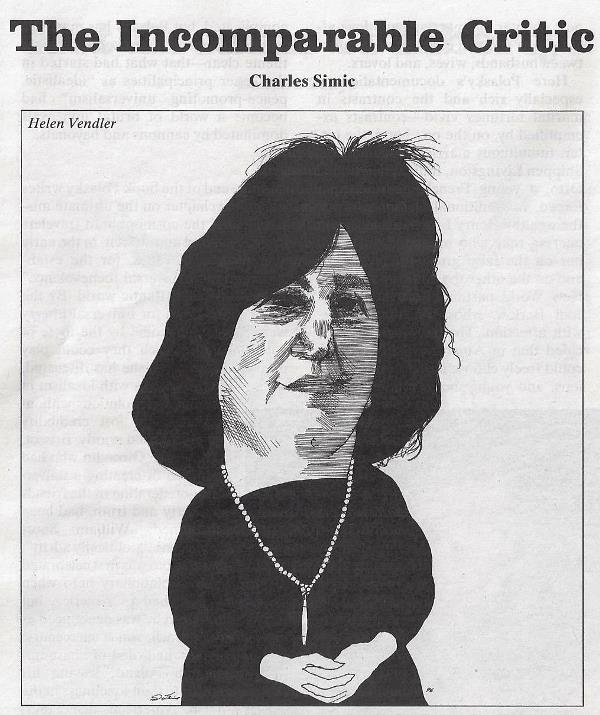
The Incomparable Critic
http://www.nybooks.com/articles/archives/2015/aug/13/helen-vendler-incomparable-critic/
Charles Simic
Nostalgia
When the cobbler shop closed in our village
with a hand-written note in the window
and an apology
on a wintry evening,
while crows sat with big shoulders,
their backs turned in the last shiver of light,
I was driven
not to elegy but etymology:
Ceapail perhaps, meaning binding or fettering?
Klabba from the Swedish?
More likely cobolere, to mend shoes.
As if the origin of a word we used
without thinking could help us deal
with what we were about to lose
without thinking:
a small room
gloomy with machines, with
a hand crank and a leather treadle
where I saw a woman standing,
years ago, her paired shoes
in her hands and already
I was placing them in some ideal
river village
where someone said
I'll make up a bed for you
and immediately
I could hear the chime
of another childhood: a spare room
perfumed by windfalls in one corner,
porcelain ornaments on a traycloth,
a painting on the wall of a flowered lane
I wanted them to walk down
until they wandered
into the dusk
of another word: this time nostalgia.
The first part of it nostos, meaning
the return home.
- Eavan Boland
The Treepenny Review Fall 2014
Hoài hương
Khi cái tiệm bồ tèo ở trong làng
Đóng cửa, với tờ giấy, vài hàng viết tay, xin lỗi,
ở cửa sổ
Vào một chiều tối có gió
Khi lũ quạ ngồi, với những cái vai kếch xù,
Với cái lưng quay về cú rùng mình sau cùng
của ánh sáng
Tớ bị quần thảo, không phải bởi một bài ai điếu, hay một
bi khúc
Nhưng mà là, một đam mê, săn đuổi cái nghĩa
ban đầu của 1 từ.
Ceapail chắc có nghĩa là binding [trói
buộc], hay fettering [rằng buộc]?
Klabba, từ tiếng Thụy Điển?
Giống như cololere, vá giầy.
Như thế, cái khởi thuỷ, cái gốc của một từ chúng
ta dùng
chẳng suy nghĩ
có thể giúp chúng ta lèm bèm về 1
cái gì
chúng ta mất
[cũng] chẳng suy tư cái con mẹ gì cả!
Một căn phòng nhỏ
Âm u, lù tà mù, với những máy móc
Một cái quay tay, một cái bàn đạp bằng da
Nơi tôi nhìn thấy 1 người đàn bà đứng
Nhiều năm trước đây
Đôi giầy của nàng trên tay nàng
Và tôi bèn coi như đã làm rồi, cái
việc
Để chúng vào trong con sông lý tưởng nào
đó
Con sông làng
Nơi có người nào nói
Ta sẽ làm giường cho mi
Và liền lập tức
Tôi có thể nghe tiếng chuông đổ
Của một thời thơ ấu khác: một căn phòng dư,
Dậy mùi táo từ một góc phòng
Những đồ trang trí bằng sành trên một cái
khay bằng vải
Một bức vẽ trên tường, một con đường đầy hoa
Tôi muốn chúng bước ra khỏi bức họa
Cho tới khi chúng đi dạo vào hoàng hôn
Của một từ khác: hoài hương
Cái phần đầu của từ này, nostos
Có nghĩa là,
Nhớ Saigon.
Love Poem
Feather duster.
Birdcage made of whispers.
Tail of a black cat.
I'm a child running
With open scissors.
My eyes are bandaged.
You are a heart pounding
In a dark forest.
The shriek from the Ferris wheel.
That's it, bruja
With arms akimbo
Stamping your foot.
Night at the fair.
Woodwind band.
Two blind pickpockets in the crowd.
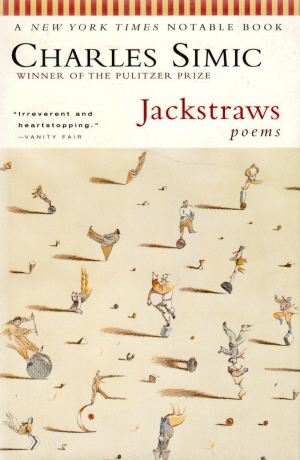
Charles Simic: Jackstraws
Thơ Tình
Chổi lông gà quét
bụi
Lồng chim làm bằng những lời thì
thầm
Đuôi mèo đen
Gấu là đứa trẻ chạy
Với cây kéo mở
Mắt dán băng
Em của Gấu ư?
Trái tim nện thình thịch
Trong khu rừng âm u
Tiếng rít từ bánh xe Ferris
Vậy đó, bruja
Tay chống háng
Dậm chân
Đêm hội
Băng Woodwind
Hai tên móc túi mù
Trong đám đông.
My shadow and your shadow on the wall
Caught with arms raised
In display of exaggerated alarm,
Now that even a whisper, even a breath
Will upset the remaining straws
Still standing on the table
In the circle of yellow lamplight,
These few roof-beams and columns
Of what could be a Mogul Emperor's palace.
The Prince chews his long nails,
The Princess lowers her green eyelids.
They both smoke too much,
Never go to bed before daybreak.
Charles Simic: Jackstraws
Rút cọng rơm
Bóng của GNV và của BHD thì ở trên tường
Xoắn vào nhau, bốn cánh tay dâng cao
Trong cái thế báo động hơi bị thái quá,
Và bây giờ, chỉ cần một lời thì thầm,
Có khi chỉ một hơi thở thật nhẹ
Cũng đủ làm bực mình cả đám còn lại
Vẫn đứng trên mặt bàn .
Trong cái vòng tròn ánh sáng
đèn màu vàng
Vài cây xà, cây cột
Của cái có thể là Cung Ðiện của Hoàng
Ðế Mogul.
GNV cắn móng tay dài thòng,
BHD rủ cặp mí mắt xanh.
Cả hai đều hút thuốc lá nhiều quá,
Chẳng bao giờ chịu đi ngủ trước khi đêm qua.
Beauty Parlor
School of the deaf with a playground
In a tangle of dead weeds and trash
On a street of torched cars and vans,
Here then is the white and red banner,
Grime-streaked and wind-torn,
Still inviting us to the GRAND OPENING.
The one with a flamethrower hairdo
Who set all our hearts on fire,
Where is she today? I inquired
Of a ragged little tree in front,
While its branches took swipes at my head
As if to knock some sense into me.
Charles Simic: Jackstraws
Tiệm Làm Đẹp
Trường của những người điếc với một cái sân chơi
Hầm bà làng những cỏ khô và rác
rến
Trên một con phố với những xe như những ngọn đuốc
Chỗ này, chỗ kia, là những băng vải, trắng và
đỏ
Bụi bặm, rách bươm vì gió
Nhưng vưỡn mời chúng ta vào Ngày Hội Lớn
Cái em kỳ nữ gì gì đó
Với cái băng đô đỏ rực
Làm tim chúng ta cũng rực đỏ theo màu cờ
Em đó bi giờ đâu nhỉ? Gấu bèn hỏi
Cái cây nhỏ, tả tơi, trước mặt,
Cành của nó lòa xòa xoa đầu Gấu
Như muốn gõ bật ra một ý nghĩa nào đó.
SIXTEEN
Loving the World Anyway
I should be content
to look at a mountain
for what it is
and not as a comment
on my life.
-DAVID IGNATOW
Three brief images-one Chippewa, one Turkish, and one West African-move
the focus of a man's attention from self to world.
Ba hình ảnh ngắn ngủi chuyển sự chú tâm của
con người, từ nó tới thế giới.
SOMETIMES I GO ABOUT PITYING MYSELF
Sometimes I go about pitying myself,
and all the time
I am being carried on great winds across the sky.
Chippewa music adapted from the translation by Frances
Densmore
Đôi khi Gấu tự thương hại
Gấu
Đôi khi Gấu tự thương hại Gấu
Và suốt thời gian đó thì
Gấu được những trận gió lớn chở đi tung tăng khắp thế gian!
UNITY
The horse's mind
Blends
So swiftly
Into the hay's mind
FAZIL HUSNU DAGLARCA
translated by Talat Sait Halman
Một mối
Tâm trí, thần hồn chú ngựa
Thì bèn quấn quýt với linh hồn cỏ khô
OLD SONG
Do not seek too much fame,
but do not seek obscurity.
Be proud.
But do not remind the world of your deeds.
Excel when you must,
but do not excel the world.
Many heroes are not yet born,
many have already died.
To be alive to hear this song is a victory.
Traditional, West Africa
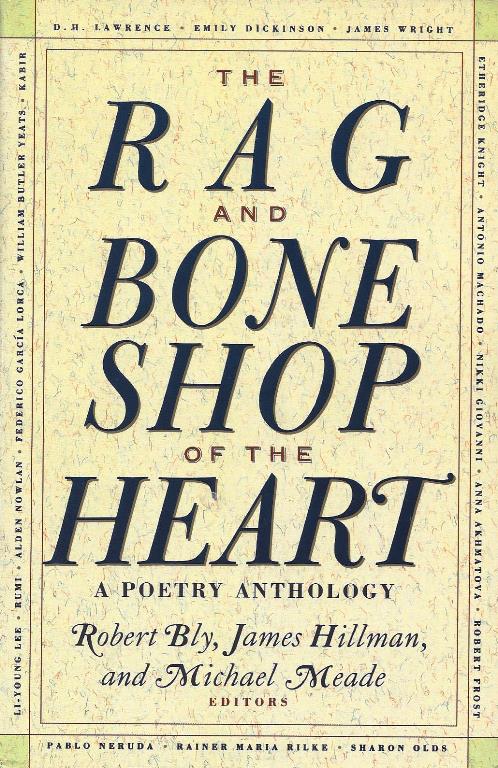
The Rag and the Bone Shop of the Heart
A Poetry Anthology
Robert Bly, James Hillman and Michael Meade editors
Một trang Tin Văn cũ
Đừng tìm kiếm danh vọng nhiều quá
Nhưng đừng tìm kiếm sự tối tăm.
Hãy hãnh diện
Nhưng cũng đừng nhắc nhở thế giới về những chiến công của
bạn
Chơi trội, OK, nếu bạn phải chơi trội.
Nhưng đừng chơi trò nổi cộm với cả thế gian
Nhiều vị anh hùng chưa sinh ra
Nhiều người đã chết
Sống, và vô 1 trang TV cũ, đọc, thì đã
là một chiến thắng khổng lồ rồi!
BREASTS
I love breasts, hard
Full breasts, guarded
By a button.
They come in the night.
The bestiaries of the ancients
Which include the unicorn
Have kept them out.
Pearly, like the east
An hour before sunrise,
Two ovens of the only
Philosopher's stone
Worth bothering about.
They bring on their nipples
Beads of inaudible sighs,
Vowels of delicious clarity
For the little red schoolhouse of our mouths.
Elsewhere, solitude
Makes another gloomy entry
In its ledger, misery
Borrows another cup of rice.
They draw nearer: Animal
Presence. In the barn
The milk shivers in the pail.
I like to come up to them
From underneath, like a kid
Who climbs on a chair
To reach a jar of forbidden jam.
Gently, with my lips,
Loosen the button.
Have them slip into my hands
Like two freshly poured beer-mugs.
I spit on fools who fail to include
Breasts in their metaphysics,
Star-gazers who have not enumerated them
Among the moons of the earth ...
They give each finger
Its true shape, its joy:
Virgin soap, foam
On which our hands are cleansed.
And how the tongue honors
These two sour buns,
For the tongue is a feather
Dipped in egg-yolk.
I insist that a girl
Stripped to the waist
Is the first and last miracle,
That the old janitor on his deathbed
Who demands to see the breasts of his wife
For one last time
Is the greatest poet who ever lived.
O my sweet, my wistful bagpipes.
Look, everyone is asleep on the earth.
Now, in the absolute immobility
Of time, drawing the waist
Of the one I love to mine,
I will tip each breast
Like a dark heavy grape
Into the hive
Of my drowsy mouth.
CHARLES SIMIC
That the old janitor on his deathbed
Who demands to see the breasts of his wife
For one last time
Is the greatest poet who ever lived.
Làm nhớ
NGUYỄN TÔN NHAN
Đời chẳng cho ta chút gì cả
Một mảnh không gian thở ngợp người
Gió tạt hôm kia môi phai má
Nắng ngườm bữa nọ má hoàn môi
Từ chốn không quen mà chẳng lạ
Ta đi về tới dứt luân hồi
Em bồng ngây dại ra hong
tóc
Sớm bay tạt hết khô mồ hôi
Lồng lộng trời cao sa xuống thấp
Không cho ngửi chút ngái trong người
Thì ra ta vẫn thèm ghê gớm
Xin cho ngửi đến chết mùi đời
Hỡi ơi mộng ngắn như gang tấc
Đo chẳng vừa nào nắng cứ phai
Mưa cứ tạt cho bay nửa giấc
Ta chẳng còn biết nhớ mong ai
Một mảnh không gian nho
nhỏ thở
Ngày sau thoi thóp thoáng hương nhài
Hay là hương của em xưa cũ
Vỡ nửa dưới thềm hơi hướng rơi.
1995
Hihi, a2a rule No.#1 :
K
Tks and Best Regards and Take Care
GCC
Jun 17 at 7:15 PM
Tối qua, TB 15.6.18 vợ chồng tớ dự tiệc cưới của con trai Hàm.
Hình này do bà xã tớ chụp
NKL’s
TKS
Chúc Mừng bạn Hàm và gia đình.
NQT’s
Hình: Quyên & Hàm & Lãng
Dear ông Gấu
chúc mừng Jennifer và Richie lên
lớp. ("hôm qua đi học rồi mà!") (1)
gửi ông Gấu một clip xem cho vui
tks
DHQ
Tks
GCC's
(1)
Lần về Saigon, Gấu có ghé quán. Bà chủ
quán, chắc đã mất, con cháu kế nghiệp, chắc thế.
Dương Nghiễm Mậu cũng hay ngồi quán này, nhưng Gấu chưa từng
gặp. Quán hủ tíu, cũng quán nhà, phía
bên kia đường, nổi tiếng chẳng kém cà phê Thái
Chi. Còn 1 tiệm cũng thần sầu của thời ô mai, tiệm ô
mai, ở xa xa 1 chút, về phía chợ Tân Định. Rồi quán
bánh cuốn Thanh Trì, chủ nhật có món bún
thang, cũng khu này, rồi quán cà phê Huy Tưởng,
ui choa, và nao nức cả 1 thời chưa nhớn mà đã già,
đã chết, đã hăm he mang kỷ niệm về phía bên
kia…
http://www.tanvien.net/sangtac/st03_lan_cuoi_sg.html
....
Một Sài-gòn trong có quán cà phê
Thái Chi ở đầu đường Nguyễn Phi Khanh, góc Đa Kao. Bà
chủ quán khó tính, chỉ bằng lòng với một dúm
khách quen ngồi dai dẳng như muốn dính vào tuờng,
với dăm ba tờ báo Paris Match, với mớ bàn ghế lùn tịt.
Trên tường treo một chiếc dĩa tráng men, in hình một
cậu bé mếu máo, tay ôm cặp, với hàng chữ Pháp
ở bên dưới: "Đi học hả? Hôm qua đi rồi mà!"
Đó là nơi em tôi
thường ngồi lỳ, trong khi chờ đợi Tình Yêu và Cái
Chết. Cuối cùng Thần Chết lẹ tay hơn, không để cho nạn
nhân có đủ thì giờ đọc nốt mấy trang Lục Mạch Thần
Kiếm, tiểu thuyết chưởng đăng hàng kỳ trên nhật báo
Sài-gòn, để biết kết cục bi thảm của mối tình Kiều
Phong-A Tỷ, như một an ủi mang theo, thay cho những mối tình tưởng
tượng với một cô Mai, cô Kim nào đó, như một
nhắn nhủ với bạn bè còn sống: "Đừng yêu sớm quá,
nếu nuốn chết trẻ." Chỉ có bà chủ quán là
không quên cậu khách quen. Ngày giỗ đầu của
em tôi, bà cho người gửi tới, vàng hương, những lời
chia buồn, và bộ bình trà "ngày xưa cậu Sĩ
vẫn thường dùng."
Auden
Poet's Choice
39·
YEHUDA AMICHAI
Once you were my guardian,
Now I am your guard.
AFTER MY father died, one of the first poems I wanted to reread was
Yehua Amichai's "Letter of Recommendation." I first read this lyric
in the Israeli poet's book Amen in 1977, and it has remained with
me ever since as a model of sacred passion, of unabashed feeling and precise
tenderness.
LETTER OF RECOMMENDATION
On summer nights I sleep naked
in Jerusalem on my bed,
which stands on the brink
of a deep valley
without rolling down into it.
During the day I walk about,
the Ten Commandments on my lips
like an old song someone is humming to himself
Oh, touch me, touch me, you good woman!
This is not a scar you feel under my shirt.
It's a letter of recommendation, folded,
from my father:
"He is still a good boy and full of love."
I remember my father waking me up
for early prayers. He did it caressing
my forehead, not tearing the blanket away.
Since then I love him even more.
And because of this
let him be woken up
gently and with love
on the Day of Resurrection.
(TRANSLATED BY YEHUDA AMICHAI AND TED HUGHES)
Amichai's poems keep what he calls "the route to
childhood open." They speak with warmth, nostalgia, and reverence for
his dead father. Playful wit doesn't work against the feeling in this
poetry, but in tandem with it. Unlike many contemporary poets here and
abroad, Amichai doesn't fear showing too much emotion in his work, and he
often lets his love songs ("Oh, touch me, touch me, you good woman!") turn
into memorial poems and prayers for the dead.
I love the human scale-the vulnerable presence-in Amichai's poetry,
and I can't help feeling that the example of a sweet, gentle, and religious
Jewish father stands as an implicit challenge to other more traditional
hyper-aggressive societal models of fatherhood and masculinity.
Do we become like parents to the dead? In "My Father's
Memorial Day," Amichai visits not just his father's graveside but all those
buried with him in a single row, a group of people yoked together by death,
"his life's graduation class." I'm struck by the complete confidence he
has in the mutual, ongoing love that persists between his father and him
("My father still loves me, and I / Love him always, so I don't weep") and
the way the poem then opens out into a lyric that tries to do justice to
the genuine human sadness of the cemetery it-self Amichai's feeling extends
to embrace the suffering of others ("I have lit a weeping in my eyes"). He
concludes with a kind of ritual mourning-a parental feeling-for someone
else's child:
MY FATHER'S MEMORIAL DAY
On my father's memorial day
I went out to see his mates-
All those buried with him in one row,
His life's graduation class.
I already remember most of their names,
Like a parent collecting his little son
From school, all of his friends.
My father still loves me, and I
Love him always, so I don't weep.
But in order to do justice to this place
I have lit a weeping in my eyes
With the help of a nearby grave-
A child's. "Our little Yossy, who was
Four when he died."
(TRANSLATED BY YEHUDA AMCHHAI AND TED HUGHES)
130.
FAREWELL
Another year gone-
hat in my hand,
sandals on my feet.
-BASHO
GOOD-BYES ARE POIGNANT. They belong to the part of life that's
to write about. I'd like to close with a special nod to the reader,
I think of as a friend. I'd like to sign it with a wave and even a good-bye,
the lyric as farewell. As Wallace Stevens writes, "That wo be waving and
that would be crying, I Crying and shouting meaning farewell" ("Waving
Adieu, Adieu, Adieu").
My grandfather taught me that, when a friend or relative was
leaving on the train, we should stand on the platform and continue waving
until the train had disappeared. It was something he learned a Japanese
friend. I was delighted to find this notion confirmed Robert Aitken's
illuminating book A Zen Wave, in which he remarks
that the Japanese say good-bye to the very end: "They wave and waving
until their friends are out of sight." He points this out as part of a
commentary on one of Basho's poems, which Robert Hass renders:
Seeing people off,
being seen off-
autumn in Kiso.
Basho seems to be saying that for him, fall in Kiso is the time
of departures. It is almost the outcome-the upshot-of our leave-taking.
Now we say good-bye to our friends; now our friends say good-bye to
us.
The experience of seeing off a friend is also
important in Chinese poetry. Here is Ezra Pound's version of a striking
poem that wanderer Li Po wrote in 754 about parting from a dear one
in Hsuancheng. Pound's lyrical adaptation first appeared as one of "Four
Poems of Departure" in Cathay (1915). (There
is also a strong version of this poem in Red Pine's Poems of the Masters.)
TAKING LEAVE OF A FRIEND
Blue mountains to the north of the walls,
White river winding about them;
Here we must make separation
And go out through a thousand miles of dead grass.
Mind like a floating wide cloud,
Sunset like the parting of old acquaintances
Who bow over their clasped hands at a distance.
Our horses neigh to each other
as we are departing.
"Dear friend whoever you are take this kiss, /I give it especially
to you, do not forget me," Whitman declared in one of his songs of parting,
"So Long!" (He also boldly announced, "Camerado, this is no book, / Who
touches this touches a man.") I'd like to close with lines of farewell
from the twenty-fourth section of the 1860 edition of Leaves of Grass.
Whitman was unabashed about addressing and embracing each stranger, each
one of us, as a dear familiar, about imagining the exchange between poet
and his unknown reader as a form of creative love. I leave these lines
to each individual reader, to each one of you, as a fleeting final gesture
of our shared participation in poetry:
Lift me close to your face till I whisper,
What you are holding is in reality no book, nor part of a book,
It is a man, flushed and full-bodied-it is I- So long!
We must separate-Here! take from my lips this kiss,
Whoever you are, I give it especially to you;
So long-and I hope we shall meet again.
Note: Bài viết đóng lại Poet's Choice. Bài
haiku của Basho, làm Gấu nhớ tới bài của Nguyễn Bính,
"cánh buồm nâu, cánh buồn nâu, cánh
buồm... "
Nhìn người đi
đi-
mùa thu ở Kiso.
Bài thơ của Đỗ Phủ, cũng... OK. Nó làm
Gấu, không phải nhớ tới Nguyễn Bính, mà, chính
Gấu, lần tính farewell, ở PLT, tếu thế!
To Please a Shasow
J. Brodsky
…
Yeats’s [Bài thơ tưởng niệm Yeats của Auden. NQT] last, with
its shuddering
The mercury sank in the mouth of the dying day.
They overshadowed that unforgettable rendition of stricken body as
a city whose suburbs and squares are gradually emptying as if after a
crushed rebellion. They over-shadowed even that statement of the era
. . . poetry makes nothing happen....
They, those eight lines in tetrameter that made this third part of
the poem sound like a cross between a Salvation Army hymn, a funeral
dirge, and a nursery rhyme, like this:
Time that is intolerant
Of the brave and innocent,
And indifferent in a week
To a beautiful physique,
Worships language and forgives
Everyone by whom it lives;
Pardons cowardice, conceit,
Lays its honors at their feet
Thời gian vốn không khoan
dung
Đối với những con người can đảm và thơ ngây,
Và dửng dưng trong vòng một tuần lễ
Trước cõi trần xinh đẹp,
Thờ phụng ngôn ngữ và
tha thứ
Cho những ai kia, nhờ họ, mà nó sống;
Tha thứ sự hèn nhát và trí trá,
Để vinh quang của nó dưới chân chúng.
I remember sitting there in the small wooden shack, peering through
the square porthole-size window at the wet muddy, dirt road with a few
stray chickens on it, half believing what I'd just read, half wondering whether
my grasp of English wasn't playing tricks on me. I had there a veritable
boulder of an English-Russian dictionary, and I went through its pages time
and again, checking every word, every allusion, hoping that they might spare
me the learning that stared at me from the page. I guess I was simply refusing
to believe that way back in 1939 an English poet had said, "Time ... worships
language," and yet the world around was still what it was.
But for once the dictionary didn't overrule me.
Auden had indeed said that time (not the time) worships language,
and the train of thought that statement set in rnotion in me is still
trundling to this day. For "worship" is an attitude of the lesser toward
the greater. If time worships language, It means that language is greater,
or older, than time, which is, in its turn, older and greater than space.
That was how I was taught, and I indeed felt that way. So if time – which
is synonymous with, nay, even absorbs deity-worships language, where then
does language come from? For the gift is always smaller than the giver.
And then isn't language a repository of time? And isn't this why time worships
it? And isn't a song, or a poem, or indeed a speech itself, with its caesuras,
pauses, spondees, and so forth, a game language plays to restructure time?
And aren't those by whom language "lives" those by whom time does too? And
if time "forgives" them, does it do so out of generosity or out of necessity?
And isn't generosity a necessity anyhow?
….
Brodsky: To Please a Shadow
Note: Cuốn thơ tiếng Anh, hóa ra của 1 người bạn ở Moscow,
Gấu nhớ lộn, của 1 độc giả, tội nghiệp nhà thơ bị nhà nước
lưu đầy nội xứ, gửi tặng. Nhưng cái cảnh Brodsky đọc nó- remember
sitting there in the small wooden shack, peering through the square porthole-size
window at the wet muddy, dirt road with a few stray chickens on it…, thì
đúng như Gấu còn nhớ, và nó làm Gấu
nhớ đến Gấu, lần đầu nghe “Ngày mai đi lượm xác chồng”, ở
nông trường cải tạo Đỗ Hoà, Nhà Bè.
Cái sự ngộ ra cả 1 cõi thơ, trong có cõi
thơ của mình, mà Brodsky trải qua, khi đọc hai khúc
trên của Auden, quái làm sao, Gấu cũng trải qua -
vào lúc chót đời, khi được Ông Trời trao tặng
món quà thơ, thưởng công làm trang Tin Văn -
khi đọc Milosz, khi ông đọc Simone Weil, Khoảng Cách Là
Linh Hồn Của Cái Đẹp: Nếu không đi tù VC, là
Gấu không làm sao hiểu được, cái hồn của văn chương
Ngụy, là ở trong 1 số bài nhạc sến của chúng.
Sao không hát cho những người vừa nằm xuống chiều qua?
V/v Vưỡn chuyện Cái Ác Bắc Kít:
Marlene Dietrich by David Levine
GABRIELE ANNAN
Girl From Berlin
Originally published February 14,1985, as a review
of Marlene Dietrich's ABC, Ungar Marlene D. by Marlene Dietrich. Grasset
(Paris) Sublime Marlene by Thierry de Navacelle. St. Martin's
Marlene Dietrich: Portraits 1926-1960, introduction
by Klaus-Jurgen Sembach, and epilogue by losefvon Sternberg. Schirmer/Mosel;
Grove Marlene a film directed by Maximilian Schell, produced by Karel
Dirka. Dietrich by Alexander Walker. Harper and Row
Among the rarities Schell has to show is a scene from
Orson Welles's Touch of Evil (1958), in which Dietrich was only a guest
star. She plays the madame of a Texas brothel, Welles a corrupt, alcoholic
police chief on the skids. He comes into the brothel and finds her alone
at a table in the hall.
"You've been reading the cards, haven't you?" [he says].
"I've been doing the accounts."
"Come on, read the future for me."
"You haven't got any."
"Hm ... what do you mean?"
"Your future's all used up. Why don't you go home?"
Dietrich's voice is deadpan, but it breaks your heart all right with
a Baudelairean sense of the pathos of human depravity, degradation, and
doom.
“Cô gái từ Berlin” là 1 bài
viết về nữ tài tử điện ảnh người Đức, Marlene Dietrich.
Trong phim “Cánh Đồng Bất Tận", em đóng
vai 1 bướm Xề Gòn, buồn buồn ngồi bói Kiều. Một tên
cớm Bắc Kít bước vô, ra lệnh:
-Coi cho ta 1 quẻ về tương lai.
Ngài đâu còn?
-Mi nói sao?
Tương lai của Ngài xài hết rồi, sao Ngài không
về lại xứ Bắc Kít của Ngài đi?
Giọng em bướm trong Cánh Đồng Bất Tận mới dửng dưng, bất cần
đời làm sao, nhưng bất cứ 1 tên Mít nào nghe
thì cũng đau thốn dế, khi nghĩ đến 1 xứ Mít tàn tạ
sau khi Bắc Kít chiếm trọn cả nước.
Đúng là THNM!
Số báo này, câu đề từ của nó,
đúng câu mà Gấu đã từng chôm, để vinh
danh thơ trẻ ở trong nước:
Thousands have lived without love, not one without
water
W.H. Auden, 1957
http://www.tanvien.net/g…/gt_tho_toi_khong_danh_cho_ban.html
Xin trao thi sĩ vòng hoa tặng : Auden, nhà
thơ người Anh, khi được hỏi, hãy chọn bông hoa đẹp nhất trong
vòng hoa tặng, ông cho biết, bông hoa đó đã
tới với ông một cách thật là khác thường. Bạn
của ông, Dorothy Day, bị bắt giam vì tham gia biểu tình.
Ở trong tù, mỗi tuần, chỉ một lần vào thứ bẩy, là
nữ tù nhân được phép lũ lượt xếp hàng đi tắm.
Và một lần, trong đám họ, một tiếng thơ cất lên, thơ
của ông, bằng một giọng dõng dạc như một tuyên ngôn:
"Hàng trăm người sống không cần tình
yêu,
Nhưng chẳng có kẻ nào sống mà không cần nước"
Khi nghe kể lại, ông hiểu rằng, đã không
vô ích, khi làm thơ.
Và. đúng như Gấu tiên đoán,
Brodsky được vinh danh, qua số báo, nhờ tác phẩm Thuỷ Ấn,
viết về Venice, post sau đây
Tuy nhiên, cả số báo, là nhằm vinh danh xứ Nam Kít,
và thứ văn chương của nó, như sông lạch:
Too often, where we need water we find guns
Ban Ki–moon 2008
Câu trên, 1 cách nào đó,
giải thích 30 năm nội chiến từng ngày.
1992: Venice
WAVE THEORY
I always adhered to the idea that God is time, or at least that his spirit
is. Perhaps this idea was even of my own manufacture, but now I don't remember.
In any case, I always thought that if the spirit of God moved upon the
face of the water, the water was bound to reflect it. Hence my sentiment
for water, for its folds, wrinkles, and ripples, and-as I am a Northerner-for
its grayness. I simply think that water is the image of time, and every
New Year's Eve, in somewhat pagan fashion, I try to find myself near water,
preferably near a sea or an ocean, to watch the emergence of a new helping,
a new cupful of time from it. I am not looking for a naked maiden riding
on a shell; I am looking for either a cloud or the crest of a wave hitting
the shore at midnight. That, to me, is time coming out of water, and I stare
at the lacelike pattern it puts on the shore, not with a gypsy like knowing,
but with tenderness and with gratitude.
This is the way, and in my case the why, I set my
eyes on this city. There is nothing Freudian to this fantasy, or specifically
chordate, although some evolutionary-if not plainly atavistic-or autobiographical
connection could no doubt be established between the pattern a wave leaves
upon the sand and its scrutiny by a descendant of the ichthyosaur, and a
monster himself. The upright lace of Venetian facades is the best line rime-alias-water
has left on terra firma anywhere. Plus, there is no doubt a correspondence
between-if not an outright dependence on- the rectangular nature of that
lace's displays- i.e., local buildings-and the anarchy of water that spurns
the notion of shape. It is as though space, cognizant here more than anyplace
else of its inferiority to time, answers it with the only property time
doesn't possess: with beauty. And that why water takes this answer, twists
it, wallops and shreds it, but ultimately carries it by and large intact
off into the Adriatic.
The eye in this city acquires an autonomy similar
to that of a tear. The only difference is that it doesn't sever itself from
the body but subordinates it totally. After a while-on the third or fourth
day here-the body starts to regard itself as merely the eye's carrier, as
a kind of submarine to its now dilating; now squinting periscope. Of course,
for all its targets, its explosions are invariably self-inflicted: it's your
own heart, or else your mind, that sinks; the eye pops up to the surface.
This, of course, owes to the local topography, to the streets-narrow, meandering
like eels-that finally bring you to a flounder of a campo with a cathedral
in the middle of it, barnacled with saints and flaunting its Medusa-like
cupolas. No matter what you set out for as you leave the house here, you are
bound to get lost in these long, coiling lanes and passageways that beguile
you to see them through, to follow them to their elusive end, which usually
hits water, so that you can't even call it a cul-de-sac. On the map this city
looks like two grilled fish sharing a plate, or perhaps like two nearly overlapping
lobster claws (Pasternak compared it to a swollen croissant); but it has
no north, south, east, or west; the only direction it has is sideways. It
surrounds you like frozen seaweed, and the more you dart and dash about trying
to get your bearings, the more you get lost. The yellow arrow signs at intersections
are not much help either, for they, too, curve. In fact, they don't so much
help you as kelp you. And in the fluently flapping hand of the native whom
you stop to ask for directions, the eye, oblivious to his sputtering A destra,
a sinistra, dritto, dritto, readily discerns a fish.
Joseph Brodsky, from Watermark. Expelled by Soviet authorities from his
native city of Leningrad in 1972, the poet settled in the United States but
spent extended periods of time in Europe. He had visited the city known as
La Serenissima -"the Most Serene"-seventeen times before writing this homage.
Asked why he liked Venice in winter, he responded, 'It's like Greta Garbo
swimming." Brodsky, who won the Nobel Prize in Literature in 1987, is buried
in Venice’s San Michele cemetery.
https://www.nobelprize.org/nobel_prizes/literature/laureates/1987/brodsky-prose.html
Watermark
Dấu Nước
Và trộn vào giấc mơ tuổi thơ, là cơn mộng đời rực
rỡ. Sẽ trở thành nhà văn. Sẽ viết một truyện dài nối
liền được hai thành phố. 
NQT: Lần Cuối Sài Gòn
Brodsky có lẽ cũng có một giấc mơ như vậy, và ông
đặt tên cho nó là "Thuỷ Ấn", hay nôm na, "Dấu
Nước", Watermark.
Đây là một từ chuyên môn. Bạn cầm một tờ giấy
[tác phẩm] nhìn, hay đọc, không thấy, nhưng soi lên
ánh sáng, thì nó hiện ra.
Trong Thủy Ấn, Brodsky viết về lần ông thăm viếng Venice, thành
phố ở trên nước. Nhưng đọc nó, thì lại ra Petersburg,
thành phố quê hương của ông.
"Đối với người cùng quê với tôi, thành phố
hiện ra, qua những trang này, thật dễ nhận, và cảm thấy, đây
chính là Petersburg được nới rộng ra, mời gọi vào
trong một lịch sử [một câu chuyện] tốt đẹp hơn, khoan nói
tới vĩ độ, not to mention latitude."
Làm sao viết về Sài Gòn, mà "soi lên"
thì lại ra.. Hà Nội, hả.... Gấu?
Khoan nói tới vĩ độ? Không lẽ Brodsky không muốn
nói tới vĩ độ thứ... 17?
Dấu Nước còn làm nhớ tới Dấu Bèo. Đài Gương
soi đến Dấu Bèo này chăng?
Nhưng đâu là Đài Gương, đâu là Dấu
Bèo? Đâu là Sài Gòn, đâu là
Hà Nội?
Hỏi như vậy, ấy là bởi vì Gấu, trong một lần ghé
xóm, nhân ghé Hà Nội, một em, khi nghe Gấu giở
giọng pha tạp chẳng ra nam mà cũng chẳng ra bắc, để làm quen,
trước khi làm tình, đã bĩu môi, "chửi xỏ":
-Anh là một thằng Nam Kỳ mà lại bắt chước giọng Bắc Kỳ
của... chúng em!
Giọng của em có vẻ bực bội, như có ý trách,
sao có thằng ngu, học gì không học, lại học cái
trò giả dạng nói tiếng bắc!
*
Câu mở ra Dấu Nước, của Brodsky:
Nhiều trăng rồi, đô Mẽo 870 lire và tôi thì
ba mươi hai.
[Many moons ago the dollar was 870 lire and I was thirty-two].
Nhiều trăng rồi, khi Gấu đi, mới mười bẩy, về, trên sáu
muơi.
Và lần "đi" và bị em chửi xỏ, là năm trăm ngàn!
Năm chục đô Canada!
*
Nhiều trăng rồi....
Hồi ở Hà Nội, Gấu khù khờ lắm.
Nhân đọc bài viết của ông bạn Kiệt Tấn, SCTBT, trên
talawas, Gấu chợt nhớ ra, là, người dậy Gấu may tay, là một
ông cậu. Cậu H. Khi Gấu ở Bạch Mai, những ngày đầu từ nhà
quê ra Hà Nội học.
Album
@ Lễ Tốt Nghiệp TH 15.6.2018
Ong & Ba & Mom & Jennifer
A LANDSCAPE
WITH CRUTCHES
So many crutches. Now even the daylight
Needs one, even the smoke
As it goes up. And the shacks-
One per customer-they move off
In a single file with difficulty,
I said, with a hell of an effort ...
And the trees behind them about to stumble,
And the ants on their toy-crutches,
And the wind on its ghost-crutch.
I can't get any peace around here:
The bread on its artificial limbs,
A headless doll in a wheelchair,
And my mother, mind you, using
Two knives for crutches as she squats to pee.
Phong cảnh với nạng
Nhiều nạng quá.
Ngay cả ánh sáng ban ngày
cũng cần 1 cái
Ngay cả khói đang bốc lên – THNM, bèn
nhớ câu thơ trứ danh của 1 thi sĩ Mít, tớ cần vịn cái
nạng, để đứng lên –
Và rồi những bao tải
Mỗi khách hàng 1 cái
Họ đi ra khỏi tiệm
theo 1 dẫy
thật khó khăn
Tớ nói, thật trần ai khoai củ, with a hell of effort….
Và những hàng cây, đằng sau họ
Cũng tính sụm
Rồi lũ kiến, với những cây nạng giống như đồ chơi của
chúng
Rồi gió
Cũng mang mạng ma
Chẳng làm sao mà có được 1 tí
bình an ở đây
Bánh mì, thì cũng mang mạng nhân
tạo
Con búp bế không đầu trong cái xe lăn
Còn bà má của tui nữa chứ, tội nghiệp
má, mind you
Bà dùng hai con dao, làm cái
nạng
Khi Bả ngồi xổm
Tè 1 phát!
POEM
My father writes all day,
all night:
Writes while he sleeps,
writes in his coffin.
It's nice and quiet in our
house.
You can see the specks of
dust in the sunlight.
I look at times over his
shoulders
At all that whiteness. The
snow is falling,
As you'd expect. A drop
of ink
Getsburied easily, like
a footprint.
I, too, would get lost but
there's his shadow
On the wall, like a perched
owl.
There's the sound of his
pen
And the bottle on the table
sunk in thought.
When the bottle empties
His great dark hand
Bigger than the earth
Feels for the moon's spigot
Bài Thơ
Cha tôi viết ngày, viết đêm
Viết khi ngủ, khi ở trong hòm
Thật xinh xắn, và thật im ắng, căn nhà của
chúng tôi
Bạn có thể nhìn thấy bụi trong ánh nắng
Đôi lúc tôi nhìn qua vai ông
Trắng toát một màu
Tuyết đang xuống
Như bạn mong muốn
Một vết mực
Thật dễ chôn
Như 1 vết chân
Tôi, thì cũng sẽ thấy mình lạc lõng
Nhưng nhìn kià
Bóng của cha tôi
Ở trên tường
Như con cú đậu trên cành
Còn tiếng ngòi viết của ông nữa chứ
Và chai nước ở trên bàn
Chìm vào trong ý nghĩ
Khi chai nước cạn, rỗng
Cái cánh tay đen, bự ơi là bự của bố
tôi
Bự hơn cả trái đất
Thèm cái vòi bình rượu
Của mặt trăng
Kẻ biến mất
Lúc này trời ấm áp, ngồi ở cổng,
vào lúc đêm
Một người nào đó chợt nhớ tới một người hàng
xóm
Chuyện xẩy ra cũng đã hơn ba mươi năm rồi
Sau bữa ăn chiều, bà làm cú tản bộ
Và chẳng bao giờ trở về nhà nữa
Với ông chồng và mấy đứa nhỏ.
Chẳng ai lúc này còn nhớ nhiều
về bà
Ngoại trừ, như thế nào, bà nở nụ cười, và
nét mặt trở nên suy tư
Bất thình lình, và chẳng hiểu tại sao,
khi được hỏi
Như thể bà đã ôm trong lòng một điều
gì bí mật
Hoặc, cực đau lòng, khi chẳng thể nào có
một.
Charles Simic
The New Yorker April 7, 2014
Lạ, là bài này ám ảnh GCC, liền ngay
sau khi đọc trên báo giấy, ở tiệm sách, và
đúng là THNM, nó làm GCC nhớ đến 1 cas,
1 ông sĩ quan Ngụy, đi cải tạo, bà vợ đem mấy đứa con
tới gửi 1 gia đình 1 người bạn thân của chồng, nhờ trông
nom giùm, và bà sau đó, biến mất, đúng
hơn, vượt biên, cùng với bồ.
Bài thơ, sau, có trong 1 tập thơ mới xb
Simic Scibbled in the dark
SCRIBBLED IN THE DARK
Sat up
Like a firecracker
In bed,
Startled
By the thought
Of my death.
*
Hotel of Bad Dreams.
The night clerk
Deaf as a shoe brush.
*
Body and soul
Dressed up
As shadow puppets,
Playing their farces
And tragedies
On the walls of every room.
*
Oh, laggard snowflake
Falling and melting
On my dark windowpane,
Eternity, the voiceless,
Wants to hear you
Make a sound tonight.
Softly now, the fleas are awake.
Charles Simic: The Lunatic
Quọt quẹt trong bóng tối
Bật dậy
Như cây pháo
Ở trên giuờng
Ngỡ ngàng
Với ý nghĩ
Ơ kìa, mình chết
*
Khách sạn của những giấc
mơ tồi
Gã nhân viên
ca đêm
Điếc đặc, như cái bàn chải đánh
giầy
*
Hồn & xác
Ăn vận như bóng những con rối
Chơi trò hề
Và bi kịch
Trên tường của mọi căn phòng.
*
Ôi, những bông tuyết
muộn
Rớt xuống, đông lại trên cửa sổ tối thui
của tôi
Vĩnh cửu, câm
Muốn mi làm cái gì
Nghe lục cà lục cục đêm nay
*
Nhè nhẹ, nhè
nhẹ
Những con bọ chét thức giấc.
[from The Lunatic]
Có trên Paris Review 209, Summer 2014, cùng
hai bài này, cũng quá tuyệt. Bản tiếng Mít
có trên Tin Văn
Auden
Poet's Choice
130.
FAREWELL
Another year gone-
hat in my hand,
sandals on my feet.
-BASHO
GOOD-BYES ARE POIGNANT. They belong to the part of life that's to write
about. I'd like to close with a special nod to the reader, I think of as
a friend. I'd like to sign it with a wave and even a good-bye, the lyric
as farewell. As Wallace Stevens writes, "That wo be waving and that would
be crying, I Crying and shouting meaning farewell" ("Waving Adieu, Adieu,
Adieu").
My grandfather taught me that, when a friend or relative was leaving
on the train, we should stand on the platform and continue waving until
the train had disappeared. It was something he learned a Japanese friend.
I was delighted to find this notion confirmed Robert Aitken's illuminating
book A Zen Wave, in which he remarks that the Japanese
say good-bye to the very end: "They wave and waving until their friends are
out of sight." He points this out as part of a commentary on one of Basho's
poems, which Robert Hass renders:
Seeing people off,
being seen off-
autumn in Kiso.
Basho seems to be saying that for him, fall in Kiso is the time of
departures. It is almost the outcome-the upshot-of our leave-taking. Now
we say good-bye to our friends; now our friends say good-bye to us.
The experience of seeing off a friend is also important
in Chinese poetry. Here is Ezra Pound's version of a striking poem that
wanderer Li Po wrote in 754 about parting from a dear one in Hsuancheng.
Pound's lyrical adaptation first appeared as one of "Four Poems of Departure"
in Cathay (1915). (There is also a strong version
of this poem in Red Pine's Poems of the Masters.)
TAKING LEAVE OF A FRIEND
Blue mountains to the north of the walls,
White river winding about them;
Here we must make separation
And go out through a thousand miles of dead grass.
Mind like a floating wide cloud,
Sunset like the parting of old acquaintances
Who bow over their clasped hands at a distance.
Our horses neigh to each other
as we are departing.
"Dear friend whoever you are take this kiss, /I give it especially
to you, do not forget me," Whitman declared in one of his songs of parting,
"So Long!" (He also boldly announced, "Camerado, this is no book, / Who
touches this touches a man.") I'd like to close with lines of farewell from
the twenty-fourth section of the 1860 edition of Leaves of Grass.
Whitman was unabashed about addressing and embracing each stranger, each
one of us, as a dear familiar, about imagining the exchange between poet
and his unknown reader as a form of creative love. I leave these lines to
each individual reader, to each one of you, as a fleeting final gesture of
our shared participation in poetry:
Lift me close to your face till I whisper,
What you are holding is in reality no book, nor part of a book,
It is a man, flushed and full-bodied-it is I- So long!
We must separate-Here! take from my lips this kiss,
Whoever you are, I give it especially to you;
So long-and I hope we shall meet again.
Note: Bài viết đóng lại Poet's Choice. Bài haiku
của Basho, làm Gấu nhớ tới bài của Nguyễn Bính, "cánh
buồm nâu, cánh buồn nâu, cánh buồm... "
Nhìn người đi
đi-
mùa thu ở Kiso.
Bài thơ của Đỗ Phủ, cũng... OK. Nó làm Gấu,
không phải nhớ tới Nguyễn Bính, mà, chính Gấu,
lần tính farewell, ở PLT, tếu thế!
JOSEPH BRODSKY
Give me another life, and I'll
be singing...
JOSEPH BRODSKY (1940-1996) wrote a poignant poem for
his fortieth birthday-May 24, 1980-that has stayed with me ever since
I first encountered it as the lead piece in his book To Urania (1988).
The poem is a revealing self-portrait, a summing up and coming to
terms, an idiosyncratic credo by a Russian poet who liked to refer
to himself as a Calvinist, which he characterized as "a man keeping
strict accounts with himself, with his conscience and consciousness."
A Calvinist, according to Brodsky's quirky, self-styled definition, "is
someone who is constantly declaring Judgment Day against himself- as
if in the absence of (or impatient for) the Almighty." By this reckoning,
Dostoevsky also counted as a Calvinist, and so did Marina Tsvetaeva, one
of Brodsky's favorite poets, whom he once called "the falsetto of time"
and "Job in a skirt."
Brodsky translated his birthday poem
himself, hence its driving music and compulsive wordplay. I can
still close my eyes and hear him reading it aloud in that special
hypnotizing chant, a sort of rabbinical keening, a soaring singsong,
that was very much his own. "This isn't a man," Nadezhda Mandelstam
once exclaimed, "it's a wind orchestra!" The aphoristic form, a capsule
autobiography accelerating at lyric speed, seems especially well suited
to Brodsky's particular temperament, to his keen intelligence and
ironic wit, to his determined, almost classical stoicism in the face
of a grief that threatened to swamp him.
Brodsky's summary poem was written
from the far side of exile. He may have had little actual choice
in the matter, but he nonetheless felt an enormous undertow of guilt
for abandoning his native country. (Brodsky went into involuntary
exile in 1972, following a conviction for social parasitism, and never
returned to Russia.) "Munched the bread of exile: it's stale and warty,"
he declares, thus referring back to a proud poem that his mentor, Anna
Akhmatova, penned in 1922: "But I pity the exile's lot," she pronounced,
"wormwood infects your foreign bread." Brodsky never viewed himself as
a victim-he was allergic to self-pity-but he did eat the harsh bread of
exile, which only increased his special solidarity with grief He was an
intimate of loss who knew what he had sacrificed.
Yet, like his great precursors Akhmatova,
Mandelstam, and Tsvetaeva, Brodsky also had an Orphic gift for turning
sorrow into high song. He transformed his ordeals in life into triumphs
in poetry. His cosmopolitan spirit dwells in his work. Above all,
I hear the intonations of his unmistakable voice and feel that the
poet has outsung death.
May 24, 1980
I have braved, for want of wild beasts, steel cages,
carved my term and nickname on bunks and rafters,
lived by the sea, flashed aces in an oasis,
dined with the-devil-knows-whom, in tails, on truffles.
From the height of a glacier I beheld half a world,
the earthly
width. Twice have drowned, thrice let knives rake my
nitty-gritty.
Quit the country that bore and nursed me.
Those who forgot me would make a city.
I have waded the steppes that saw yelling Huns in saddles,
worn the clothes nowadays back in fashion in every quarter,
planted rye, tarred the roofs of pigsties and stables,
guzzled everything save dry water.
I've admitted the sentries' third eye into my wet and
foul
dreams. Munched the bread of exile: it's stale and warty.
Granted my lungs all sounds except the howl;
switched to a whisper. Now I am forty.
What should I say about life? That it's long and abhors
transparence. Broken eggs make me grieve; the omelette, though,
makes me vomit. Yet until brown clay has been crammed down my larynx,
only gratitude will be gushing from it.
Note: Điều mà lũ Mít hải
ngoại trơ trẽn áo thụng vái nhau, cũng chính
là điều mà Hirsch nói về Brodsky, khi ông
nhắc tới Anna Akhmatova:
Brodsky's summary poem was written from the far side
of exile. He may have had little actual choice in the matter, but
he nonetheless felt an enormous undertow of guilt for abandoning his
native country. (Brodsky went into involuntary exile in 1972, following
a conviction for social parasitism, and never returned to Russia.) "Munched
the bread of exile: it's stale and warty," he declares, thus referring
back to a proud poem that his mentor, Anna Akhmatova, penned in 1922:
"But I pity the exile's lot," she pronounced, "wormwood
infects your foreign bread." Brodsky never viewed himself as a
victim-he was allergic to self-pity-but he did eat the harsh bread
of exile, which only increased his special solidarity with grief
He was an intimate of loss who knew what he had sacrificed.
Bài thơ của Brodsky – tóm tắt, nhức nhối…
nhân sinh nhật thứ 40 của ông, ở quá xa bến bờ
lưu vong, from the far side of exile. Tuy có thể có tí
phần đóng góp vào sự lựa chọn phần số của mình,
tuy nhiên, Brodsky cảm thấy tội lỗi đầy mình – he felt
an enormous undertow of guilt – khi phải bỏ nước ra đi, “nhệu nhạo
uống bơ sữa Mẽo, bánh mì lưu vong: ôi thối, và
đầy mụn", ông phán, khi nhắc tới bài thơ hiển hách
của bà chị của ông, là Anna Akhmatova, viết
năm 1922:
Nhưng ta thương hại lũ khốn đó, lũ lưu vong mũi
tẹt, tóc đen đó, “đắng cay, tủi nhục làm độc
bơ sữa, bánh mì lưu vong, hải ngoại”.
Brodsky không bao giờ nhìn mình như
là 1 nạn nhân – ông dị ứng với cái trò
tự thuơng thân, trách phận, cái gì gì
nỗi bơ vơ của bầy ngựa hoang, nhược tiểu da vàng, mũi tẹt, nhưng
ông hãnh diện đợp bánh mì cứng ngắc lưu
vong, nó chỉ làm cho ông đồng cảm với thống khổ.
Ông rất thân quen với mất mát, và biết rất
rõ, điều ông hy sinh vì nó.
Yet, like his great precursors Akhmatova,
Mandelstam, and Tsvetaeva, Brodsky also had an Orphic gift for turning
sorrow into high song. He transformed his ordeals in life into triumphs
in poetry.
His cosmopolitan spirit dwells in his work. Above all,
I hear the intonations of his unmistakable voice and feel that the
poet has outsung death.
Điều lũ Mít lưu vong tự chúng nâng
bi của chúng, “cái gì gì”, vượt qua Lò
Thiêu, cũng là điều mà Hirsch ca ngợi, ở nơi Brodsky:
He "outsung death".
Nhưng, đây cũng là điều lũ Vẹm ca ngợi
cuộc chiến đẩy lũ Mít tới mép bờ hủy diệt, “tiếng
hát át tiếng bom”!
Cũng đồ lạc xoong!
Tay này, viết phê bình, cực kỳ hung
dữ, the ferociously intelligent, nhưng cũng cực kỳ số 1 – first-rate critic.
Bài viết nào, thay vì mở ra bằng 1 câu thật trứ
danh, như là vòng hoa Nobel – là cái thông
báo báo chí – như cách mà tờ Người Kinh
Tế thường dùng, và Gấu thường bắt chước - bạn quí HPA
có lần phán bài viết nào của mi cũng… dở, trừ
cái câu mi chôm, và lần kể cho Nguyễn Tiến Văn,
anh gật gù, khó nhất là kiếm ra được cái câu
cầm chôm đó… nhưng với Wood,
thì lại khác hẳn: ông kể 1 giai thoại, có thực,
về, bằng cách nào ông gặp tác giả mà ông
viết. Với bài viết về Naipaul, là cái lần đầu gặp.
Cái tít bài viết, thật quá bảnh, và quá
đúng về Naipaul: Kẻ đánh người đến thành thương tật,
wounder, và bị đánh đến biến thành thương tật, wounded,
cả hai đều là Naipaul, và quá nữa, 1 tên mũi tẹt
lưu vong ở 1 xứ mũi lõ!
Bài này quá tuyệt.
Bài về Sebald, cũng quá tuyệt: Austerlitz
và Auschwitz là 1.
Praise for James Wood
"Wood has made himself deservedly famous for the intellectual
dazzle, literary acuteness and moral seriousness of his essays ...
A first-rate critic."
-DANIEL MENDELSOHN, The New York Times Book Review
"It is not enough to have one Wood. What is needed
is a thicket-a forest- of Woods ... [He proves] that superior criticism
not only unifies and interprets a literary culture but has the power
to imagine it into being."
-CYNTHIA OZICK, Harper's Magazine
"Let's drop the qualifiers and say it loud and clear:
[Wood is] the best. This transplanted Englishman is a blessing to
the culture ... [His] kind of open-eyed and sympathetic reading is
how criticism justifies its existence ... Let's be thankful for [Wood's]
enthusiasm, his capacious learning and his keen eye."
-ADAM BEGLEY, The New York Observer
"James Wood, the ferociously intelligent critic ...
has single-handedly done a great deal to improve the literary atmosphere
in the past few years ... [He] is one of those rare critics whose
discernment is so strong that he helps us to become better readers
of fiction. More than that: He's one of those rare writers who can enrich
one's own engagement with life."
-BRIAN MORTON, The Nation
"Inimitable ... [Wood] has not only a well-tuned ear
for prose but a remarkable ability to convey how novelistic language
transubstantiates life into literature ... Wood's essays ... vibrate
with the difficult, serious pleasure that literature uniquely provides."
-A. O. SCOTT, The New York Times Book
|
Trang NQT
art2all.net
Istanbul
Lô
cốt trên
đê
làng
Thanh Trì,
Sơn Tây
|