Dịch thuật | Dịch ngắn | Đọc sách | Độc giả sáng tác | Giới thiệu | Góc Sài gòn | Góc Hà nội | Góc Thảo Trường
Giai thoại | Potin | Linh tinh | Thống kê | Viết ngắn | Tiểu thuyết | Lướt Tin Văn Cũ | Kỷ niệm | Gấu, nhà văn| Thời Sự Hình | Gọi Người Đã Chết
Thơ Mỗi Ngày | Chân Dung | Jennifer Videom | Nhật Ký Tin Văn | Sách & Báo Mới
https://www.facebook.com/quoc.t.nguyen.1
Viết Mỗi Ngày| Last Page
Nguyễn Quốc Trụ
Sinh 16 tháng Tám,
1937 Đã
xuất
bản * Một khi kiếm, không thấy trên Nhật Ký, index: Kiếm theo trang có đánh số. Theo bài viết. Theo từng mục, ở đầu trang Tin Văn. Nhìn lại những trang Tin Văn cũ 1 2 3 4 5 Bản quyền Tin Văn Nobel văn chương 2012 Kỷ niệm 100 năm sinh của Milosz IN MEMORIAM W. G. SEBALD
Note:
Trang
này
bị
trục trặc,
mới
sửa lại.
Trang này, và "last page", và "Lướt TV là những trang hỗ trợ lẫn nhau TTT @ Phan Nguyên Blog SN_GCC_2016
|
Danilo Kis
Quoc Tru Nguyen shared a memory."Thiên tài
của một thời điểm, kinh nghiệm, nơi chốn đặc biệt". Nadine Gordimer
thổi Kis. Trong "Một cuộc gặp gỡ", Kundera viết về ông: Trung thành với Rabelais và đám Siêu thực: Những kẻ lục lọi những giấc mộng. Tôi ngồi lật lật cuốn của Danilo Kis,
cuốn sách cũ về suy tưởng, và có cảm tưởng đang ngồi
với ông, trong một quán rượu gần Trocadéro, và
ông đang nói với tôi bằng một giọng oang oang, gầm gừ,
như muốn vặc vào mặt kẻ đối diện. Kundera: Gặp Gỡ Danilo Kis kể chuyện tiếu lâm, thời gian
ở Paris, ông nhận "thư nhà", từ Nam Tư, một phong
bì dán tem, đóng dấu bưu điện hẳn hoi.
Mở ra, trang thư thứ nhất, là con dấu, với những dòng
chữ như sau: Thư này không bị kiểm duyệt. 
Borges There is no doubt: the short story or, rather, the art of the short story must be divided into pre-Borges and post-Borges. I am not thinking so much of the way he broadened the scope of reality (in the direction of the fantastic) as of the way he told his stories. The story of the Maupassant-Chekhov-O. Henry variety, which emphasized detail and created its mythologemic field by means of induction, underwent a magic, revolutionary transformation in Borges: Borges introduced deduction, which is merely another name for a kind of narrative symbolism, the consequences of which in both theory and practice are of the same magnitude as the appearance of symbolism in poetry with Baudelaire. The inductive method, after reaching its apogee in the three masters of the realistic story mentioned above, had exhausted its possibilities and- given the principle of the alternation of sensibilities and the literary reaction it provokes-feels anachronistic today [suited] Danilo Kis: Homo Poeticus, essays & interviews 34 Once exiled from the home of their language, writers are left with nothing but that language; it is the mark of their exile. They go on writing in it as if the high price they have paid made them the only ones able to resist the "exile of syntax." And if they have escaped the perilous semantic homogenization of newspeak, it is primarily because they are keenly aware that as writers they use more than words alone: they write with their entire being, with ethos and mythos, with memory, tradition, and culture, with the impetus of linguistic associations-with everything that the automatism of language turns into the flick of a hand (and vice versa). Danilo Kis: Homo Poeticus 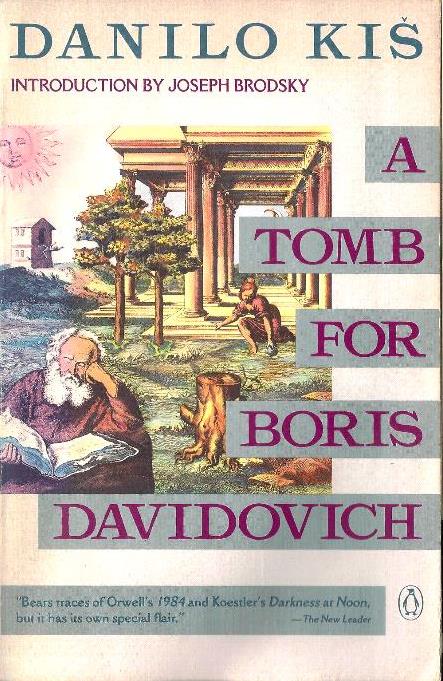
A Tomb for Boris
Davidovich
translated from the Serbian by Duška Mikić-Mitchell, with an introduction by Joseph Brodsky and an afterword by William T. Vollmann Dalkey Archive, 145 pp., $12.95 (paper) Introduction
At
first glance A Tomb for Boris Davidovich
may indeed seem like a spin-off from The First Circle,
The Gulag Archipelago (as yet unpublished in Yugoslavia),
Nadezhda Mandelstarn's Hope against Hope,
and the Medvedev brothers' various writings. The point is
that the bulk of the novel has to do with the fate of several
people who perished during the Great Terror of the late 1930s.
For an account of that the sources are unfortunately mostly Russian.
With sixty million dead in the civil war, collectivization,
the Great Terror, and things in between, Russia in this century
has produced enough history to keep the literati all over the world
busy for several generations. The aforesaid authors already belong
to the second generation. The first was Arthur Koestler's, and
several chapters of the Kis book bear a general resemblance to
Darkness at Noon, although surpassing it in both
horrifying detail and narrative skill.
Thoáng nhìn, Ngôi Mộ có vẻ như 1 thứ phó sản phẩm, từ những tác phẩm như Tầng Đầu Địa Ngục, Quần Đảo Gulag [chưa được xb ở Nam Tư], “Hy vọng chống lại Hy vọng”, của Nadezhda Mandelstarn và những cái viết của anh em nhà Medvedev. Vấn đề là, cuốn tiểu thuyết xoáy vào số phận một vài người bị tiêu trầm trong cú Đại Khủng Bố xẩy ra vào cuối thập niên 1930. Và hầu hết, đều là số phận Nga. Với 60 triệu con người chết, trong cuộc nội chiến, tập thể hóa, Đại Khủng Bố, Nga xô, trong thế kỷ này, đã sản xuất đủ lịch sử để làm cho văn chương toàn thế giới bận rộn trong vài thế hệ. Những tác giả được nói tới ở trên thuộc thế hệ thứ nhì. Thứ nhất, là Koestler. Vài chương của Ngôi Mộ có cái giông giống Đêm Giữa Ban Ngày, nhưng bảnh hơn nhiều, nếu nói về ghê rợn về chi tiết, và về kỹ năng tự sự. Ui chao Joseph Brodsky, như thế, là đã tiên tri ra được "Đêm Giữa Ban Ngày" của nhà văn người tù lương tâm Mít, VTH! Cùng 1 dòng! Cùng 1 cái tít! Thần sầu! Perhaps
the only service a real tragedy renders in leaving
its survivors as speechless as its victims is that of furthering
its commentators' language. The least that can be said
about A Tomb for Boris Davidovich is that it achieves aesthetic
comprehension where ethics fail. Of course, the mastery
of language can hardly pass for a safeguard in our enterprising
century; but at least it creates a possibility of response,
without which people are bound to remain slaves of their experience.
By having written this book, Danilo Kis simply suggests that
literature is the only available tool for the cognition of phenomena
whose size otherwise numbs your senses and eludes human grasp.
Có lẽ cú phục vụ độc nhất mà 1 bi kịch thực, đem tới, khi để cho kẻ sống sót cũng câm bặt như những nạn nhân, là, cái trò lèm bèm về ngôn ngữ của nó, sau đó. Nếu như thế, thì ít nhất, chúng ta có thể phán về “ Ngôi mộ”, nó hoàn tất cảm thông mỹ học, một khi/ở nơi mà đạo hạnh thất bại. Lẽ dĩ nhiên, khó mà coi đây là cái phao cứu nạn, trong thế kỷ “enterprising” của chúng ta, nhưng ít nhất, nó tạo 1 khả thể đáp ứng, không có nó, con người bị buộc là nô lệ của kinh nghiệm của nó. Viết “Ngôi mộ”, Kis giản dị đề xuất rằng, văn chương là dụng cụ khả hữu độc nhất, nhìn nhận hiện tượng, một khi tầm vóc của nó làm tê liệt cảm quan của bạn, và tuột ra khỏi cái nắm, víu của nhân loại A
Tomb for Boris Dauidooicb is a very dark book,
and its only happy end is that it was published and now so
splendidly translated into English by Duska Mikic-Mitchell.
It is surely a strange realm for an English reader to enter, but so it was for the millions and millions who found themselves inside it. Unlike them, an English reader can leave it whenever he likes by closing this book, finished or unfinished. Only the names here are fictitious. The story, unfortunately, is absolutely true; one would wish it were the other way around. “Ngôi mộ” là 1 cuốn sách quá u tối, và cái hy vọng độc nhất của nó, được xb, và bây giờ, được dịch thật là tuyệt vời qua tiếng Anh. Chắc chắn cái cõi này thì thật là lạ lẫm đối với độc giả người Anh, khi bước vô, nhưng có hàng triệu triệu con người cảm thấy họ ở trong đó. Không như họ, một độc giả tiếng Anh có thể ngưng đọc ở bất cứ khúc nào, bất cứ khi nào, anh ta muốn, bằng cách đóng nó lại. Chỉ có những cái tên là dởm. Câu chuyện, than ôi, bất hạnh thay, thực. Tuyệt đối thực Mới lướt net, thấy NL đi 1 đường ngợi ca Genette. Tay này, cũng 1 khám phá của GCC, và, 1 trong những tác giả gối đầu giuờng, những ngày mới bước vào làng văn, bày đặt viết phê bình. Trong bài điểm cuốn Mù Sương của NXH, Gấu có chôm 1 ý của ông, trong Hình Tượng I, về 1 nhân vật, vô thư viện, kiếm 1 cuốn, không kiếm thấy, bực quá, bèn viết 1 cuốn. Tình cờ, đọc Kis, ông cũng nhắc tới Genette, khi phải giải thích, tại làm sao mà cứ hết Mậu Thân, thì lại qua cô bạn ở Chợ Lớn, hoặc thằng em trai sĩ quan Ngụy tử trận. Cũng 1 câu, lôi ra từ Figures I Life, Literature
I'd like to devote the first
part of our interview to biographical facts that may be of interest
to your readers. Despite your known resistance to biographical
data and the biographical approach to your work, I believe that much
of it-especially the novels you have called the autobiographical
triptych" (Early Sorrows; Garden, Ashes; Hourglass)-shows
your childhood to have been of fundamental importance to your
literary development. So let's try to delineate the part played
by autobiographical material in your work on the one hand and imagination
and illusion on the other. My whole childhood is an illusion, an illusion that has fed my imagination, and after writing two or three books on the theme of "early sorrows," I feel that degrading the imagination to "biographical facts" is rank reductionism. Life cannot be reduced to books, but neither can books be reduced to life. After I related the events of my childhood in a lyrical, consistent, definitive form, that form became an integral part of my childhood, my only childhood. Even I have trouble now distinguishing between the two illusions: living truth and literary truth; they are so intertwined that it is next to impossible to trace a dividing line between them, and any other interpretation, especially by the author, is likely to impoverish them. Paraphrasing a poem diminishes its spirit, its rhythm, its élan, and reduces its metaphors to a common language. Somewhere Gerard Genette quotes La Fontaine's line "Sur les ailes du temps, la tristesse s'envole" (Sadness takes flight on the wings of time) in a rhetorian's "translation" as "Le chagrin ne dure pas toujours" (No sorrow lasts for- ever). Hiện sinh vs Cơ cấu luận GCC có nhớ từng viết
gì về cơ cấu luận và đăng tờ nào không? Lạ, là làm sao mà ông ta lại chọn đúng cuốn Sa Đọa để dịch? Không lẽ ông ta đã ngửi ra cái thân phận 1 tên bỏ chạy cuộc chiến, trốn qua Tây, và tự rủa xả mình, như nhân vật của Camus? (1) Một vị độc giả, Blog NL, hình như vậy. Kis, không chỉ mê Borges, mà còn bị coi là bị ảnh hưởng Borges, cũng như bị coi là ảnh hưởng Koestler. Ông bị chê là hết ăn cắp người này tới người khác. Bài viết của Kis về Borges, tuyệt lắm. Post liền sau đây, cùng bài viết về Nabokov. Cái nhìn của Kis về Nabokov cũng lạ. Thú thực Gấu không đọc được, mà hơn thế nữa, tởm Nabokov. Nhớ lần đầu đọc Lolita, đến cái đoạn tên đàn ông dâm đãng tính làm thịt cô bé "tiền thân" của Lo, dưới cái nhìn của cặp kính mát ai bỏ quên trên bãi biển, là Gấu thua không làm sao đọc tiếp. Lạ là sao TTT mê và dịch Nabokov? Lolita vs BHD
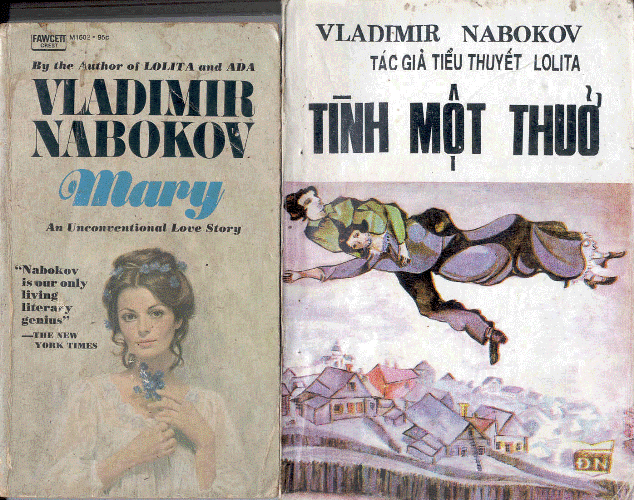
Ông chưa từng trở lại Nga? Tôi chưa từng trở về lại nước Nga, bởi vì một lý do đơn giản là tất cả nước Nga mà tôi cần thì chưa từng rời bỏ tôi, dù chỉ một khoảnh khắc: văn chương, tiếng nói, la langue, và tuổi thơ Nga của chính tôi. Tôi sẽ chẳng bao giờ trở về, tôi không bao giờ đầu hàng. Vả chăng, cái bóng thô kệch gớm ghiếc của chế độ nhà nước cớm, État policier, chắc chắn là không tan biến, trước khi tôi ngỏm. Tôi không tin là người ta biết đến những cuốn sách của tôi, ở đó, nếu có, thì ở trong tay một vài tên mà VC xứ Mít gọi là "cớm văn hóa", nhưng đừng quên điều này, nước Nga đã khủng khiếp trở thành 1 xứ sở miệt vườn trong vòng 40 năm nay, chưa nói cái chuyện, ở đó, người ta đọc, người ta nghĩ, [đúng] cái điều mà người ta đọc và suy tưởng. Mẽo là cái xứ mà tôi cảm thấy hạnh phúc hơn hết thẩy các xứ sở khác. Ở Mỹ, tôi kiếm thấy những độc giả bảnh, meilleux, của tôi, những tinh thần, esprits, cận kề tôi, Trí thức mà nói, tôi cảm thấy ở nhà của mình, khi ở Mẽo. Đó là bếp lửa, foyer, thứ nhì của tôi, theo đúng nghĩa của từ này. Nabokov trả lời BBC Télévision,
1962. Lolita made Nabokov rich and famous, but
the scandal surrounding its publication created a misunderstanding that is
still with us today. Nhân Lolita tiếng Việt ra mắt, TV sẽ chuyển
ngữ bài viết của Vargas Llosa về cuốn này. Bài
viết Jan, 1987, khi em nhí tới tuổi 40, horror of horrors, khủng
khiếp của những khủng khiếp! What do you mean when you say "Yugoslav
reality"? That people didn't talk about the fate of the Jews? Or is
it more a personal thing, a kind of pride on your part, an "I don't
want to be seen as a victim" attitude? Kis: Like it or not, being Jewish is an exceptional condition humaine and one that-regardless of time, place, or social system-has negative consequences for whoever happens to be marked by it. It is an issue unfailingly broached with discomfort and from a Manichaean perspective, either with hypocrisy or with sensitivity (which I, too, invariably share). I have been-and am to this day-subject to certain psychological inhibitions, and since I consider my fate to be primarily that of a writer, I have tried to transform these negative factors into what you might call positive literary ones. What I mean is I have concealed the Jewish component in my literary works. I was equally afraid of the weight of fact, which is dangerous for literature, and of the possibility of becoming or being taken for a minority writer. And the danger of pathos and grandiloquence is latent in all "minority literatures." 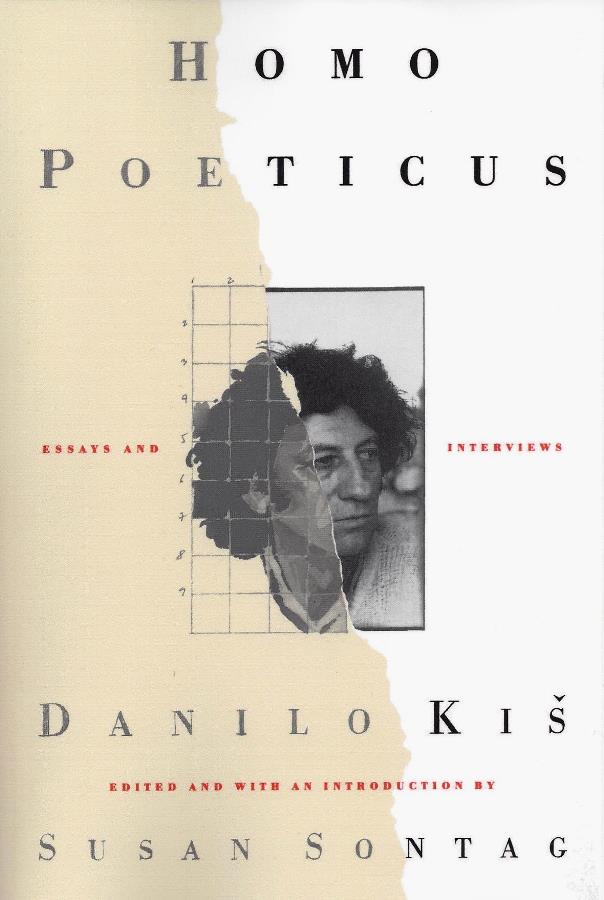
Homo Poeticus.
Regardless
We
are exotica, we are political scandal, we are at best fond memories
from the First World War and the conscience of the old poilus' d'
Orient and members of the Resistance. We are also beautiful sunsets
on the Adriatic, balmy memories of beautiful, peaceful sunsets on the
Adriatic, memories dripping with sljivovica. And
that's it. We are barely a part of European culture. Politics? Fine!
Sightseeing? Terrific! Slibowitz (as the Germans have it)? Naturally!
But who in God's name would expect to find literature there? Who could
be expected to make sense of their nationalist nonsense, of all those
languages and dialects so close to one another yet (or so they claim) so
different, of all those religions and regions? Con người Con vật thi sĩ Bất kể When it comes to literature, we've got more than enough, we Europeans. Some pretty good stuff, too. While those-what-do-you-call-' em?-srbo-krkrs, well, when they deal with their sensitive issues, when they poke fun at their leaders and their system, when they write about political scandals in picturesque settings-then they'll have a literature of their own. We civilized Europeans, pure in heart and mind, we'll describe the beauty of our sunsets and our childhoods (like St.-John Perse), we'll write poems about love and whatnot. Why don't they stick to their politico-exotico-Communistski problems and leave the real literature-the maid of all work, the sweet servant of our childhood-to us. If they start writing about what we write about-poetry, suffering, history, mythology, the human condition, "the timeworn trinkets of plangent vanity"-we won't be interested. Then they'll be like us, with their Andric and their Krleza (now how do you pronounce that one?) and Milos Cmjanski (another krkr) and Dragoslav Mihajlovic and so on, all of whom we can easily do without. So Homo politicus is for us Yugoslavs, while they have the rest, that is, every other facet of that wonderful, multifaceted crystal, the crystal known as Homo poeticus, the poetic animal that suffers from love as well as mortality, from metaphysics as well as politics. Have we deserved our fate? We have. We are guilty and must bear the consequences in silence. For we have failed to resist the temptation of exporting our minor (or major-what's the difference?) problems of nationalism and chauvinism and shouting from the rooftops that we are not primarily Yugoslavs, no, we are Serbs or Croats, Slovenes or Macedonians or whatever, listen carefully, it's very important, ladies and gentlemen, you mustn't get us mixed up, some of us are Catholic, others Orthodox, we've got Muslims and of course a few Jews (mustn't forget the Jews!). So here we are, poor "Yugoslovaks" back to our family squabbles. And we wanted to talk about literature, quote that Croat monstre sacré Miroslav Krleza (krkr!) and that Serb or Croat (take your pick) monstre sacre Ivo Andric, but no, we are so clumsy we've gone and smashed the bibelot aboli, the timeworn trinket known as literature. Which is why we don't deserve to be taken seriously. However-and this really is not our fault, God is to blame-where in heaven's name are we to place this language or languages and literature? Granted it's a Slavic language, a Slavic literature, yes, a slavyanskaya zemlya, a Slavic country, correct, but with a socialist regime slightly different from the rest. Which makes us "something like the Russians." All right, then: all-but-Russians. At least Russians don't make trouble. True, they come in a number of shapes and sizes (Azerbaijanis, Bashkirs, Kalmucks), but we can always lump them together if we use the term Soviet. So what? So nothing. No need to get excited. There have always been great traditions, great literatures, and small languages, small nations, just as there have always been large and small banknotes (dixit Andric). So let's be modest, keep our voices down, and try not to drag the whole world into our family altercations. And most important, let's not be taken in by the time-worn myth that we Yugoslovaks and other Hungarians should give up literature and stick to entertaining he whole world with politico-exotico-Communistski themes, give up trying to be anything but Homines politici, everywhere and always, and get it through our heads that poetry, play and playfulness, metaphysical obsessions (who am I? where do I come from? where am I going?), and the transports of love are not for the likes of us, that sunsets are none of our business and belong exclusively to tourists enamored of literature and poetry and hence entitled to admire them wholeheartedly and with a clear conscience. No, literature and poetry (and like Pasternak I put an equal sign between the two) are equally for us and you, our barbaric dreams and yours, our myths and yours, our loves and yours, our memories and yours, our day-to-day existence and yours, our unhappy childhood and yours (which may just have been unhappy, too), our obsession with death and yours (identical, I hope). I am well aware that poetry (=literature) is-and is becoming more and more-the description and impassioned condemnation of social injustice (much as it was in Dickens's day), the description and condemnation of labor camps, punitive psychiatric clinics, and every variety of oppression aimed at reducing human beings to a single dimension, the dimension of a zoon politikon, a political animal. Yet, by so doing, it robs them of their wealth, metaphysical thought, and poetic sensibility; it destroys their non-animal substance, their neocortex, and turns them into militant beasts, naked, blind engagés enragés, raving ideologues. The triumph of engagement, of commit- ment-to which, we must admit, we adhere only too often and which stipulates that literature which is not committed is not literature-shows to what extent politics has penetrated the very pores of our beings, flooded life like a swamp, made man unidimensional and poor in spirit, to what extent poetry has been defeated, to what extent it has become the privilege of the rich and "dec- adent" who can afford the luxury of literature, while the rest of us ... It is a danger that threatens us all. Yet we must realize that literature-poetry-is a defense against barbarism and that even if it may not "ennoble our sentiments" it does do some good: it does give some meaning to the vanity of existence. If only on the strength of this anthropological fact, then, we belong to the family of European nations, and have as much right as they or more-given our Judeo- Christian, Byzantine, and Ottoman tradition-to membership in the European cultural community. Then, and only then, come the technical issues of translation, commentary, references, parallels, and such. The rest . . . is literature. |

Lô
cốt trên
đê
làng
Thanh Trì, Sơn Tây Bếp Lửa trong văn chương
Báo Văn [Phê Bình] cũ, có bài của GCC Mù Sương Hồi Ký Viết Dưới Hầm Nghĩ về phê bình Mây Bay Đi Nguyễn Du giữa chúng ta "Tạp Ghi" by Tuấn Anh Chữ và Việc TSVC Nhã Tập Truyện Kiều ABC Xuân Vấn Đề Kỷ Dậu Truyện ngắn Võ Phiến Những ngày ở Sài Gòn nhà xb Hoàng Đông Phương Mộ Tuyết [Hồi bắt đầu đi làm] Happy Birthday GCC Cali 3.08 Cali Tháng Tám 2011 |

