|
Notes
|
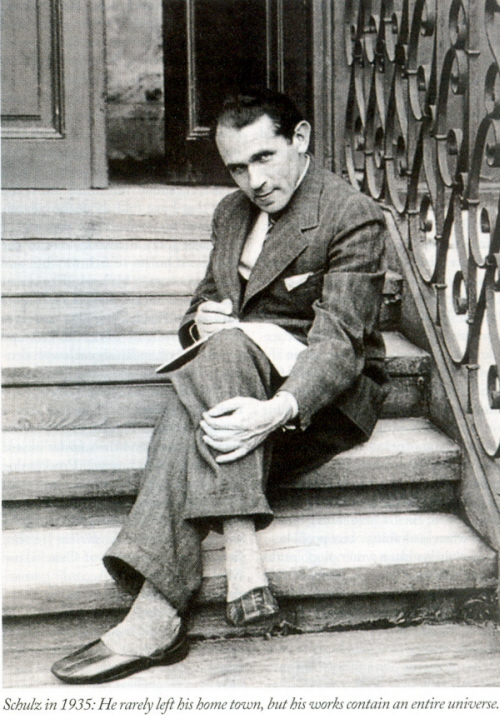
V/v
Schulz. Trong Inner Workings,
Coetzee đưa ra một hình ảnh thật thần kỳ về
Schulz, người nghệ sĩ "trưởng thành trong thơ ấu", 'mature into
childhood'. Trên Người Nữu Ước, 8 & 15, June, 2009, có bài
viết Giai thoại về Schulz, Bruno Schulz's legend,
thật tuyệt, của David Grossman. Tay này là tác giả cuốn Viết trong bóng tối, Tin Văn đã
từng giới thiệu. Ông cũng đã từng đăng đàn diễn thuyết chung với DTH
tại Nữu Ước.
Cái chết của Schulz cũng là một giai thoại, nhưng thê lương vô cùng,
qua kể
lại của Grossman, trong Viết trong
bóng tối. Ông đi tù Lò Thiêu, nhờ tài vẽ, được một tay sĩ quan
Nazi bảo bọc, khiến một tay sĩ quan Nazi khác ghét, và sau cùng giết
ông, rồi kể lại cho tay kia nghe. Tay kia xua tay, chuyện lẻ tẻ, để
kiếm đứa khác, thế!
*
LIFE AND
LETTERS
THE AGE OF
GENIUS
The legend
of Bruno Schulz.
BY DAVID
GROSSMAN
An afternoon
in spring, Easter Sunday, 1933. Behind the reception desk of a small
hotel in
Warsaw stands Magdalena Gross. Gross is a sculptor, and her modest
family hotel
serves as a meeting place for writers and intellectuals. In the hotel
lobby
sits a Jewish girl of about twelve, a native of Lodz. Her parents have
sent her
to Warsaw for a school holiday. A small man, thin and pale, enters the
hotel,
carrying a suitcase. He is a bit stooped, and to the girl-her name is
Jakarda
Goldblum-he seems frightened. Gross asks him who he is. "Schulz," he
says, adding, "I am a teacher, I wrote a book and I-"
She
interrupts him. 'Where did you come from?"
"From
Drohobycz."
"And
how did you get here?"
"By
train, by way of Gdanski Bridge." The woman teases him. "Tanz?
You are a dancer?"
'What? No,
not at all." He flinches, worries the hem of his jacket. She laughs
merrily, spouting wisecracks, winking past him at the girl.
"And
what exactly are you doing here?" she asks finally, and he whispers,
"I am a high-school teacher. I wrote a book. Some stories. I have come
to
Warsaw for one night, to give it to Madame Nalkowska." Magdalena Gross
snickers, looks him up and down. Zofia Nalkowska is a renowned Polish
author
and playwright. She is also affiliated with the prestigious publishing
house Roj.
With a little smile, Gross asks, "And how will your book get to Madame
Nalkowska?"
The man
stammers, averts his eyes, yet he speaks insistently: Someone has told
him that
Madame Gross knows Madame Nalkowska. If she would be so kind-
And when he
says this Magdalena Gross stops teasing him. Perhaps-the girl
guesses-this is
because he looks so scared. Or perhaps it's his almost desperate
stubbornness.
Gross goes to the telephone. She speaks with Zofia Nalkowska and tells
her
about the man. "If I have to read the manuscript of every oddball who
comes to Warsaw with a book," Nalkowska says, "I'll have no time for
my own writing.".
It Magdalena
Gross asks that she take one quick look at the book. She whispers into
the
phone, "Do me a favor. Just look at the first page. If you don't like
it,
tell it him and erase the doubt from his heart."
Zofia Nalkowska
agrees reluctantly. Magdalena Gross hangs up the phone. "Take a taxi.
In
half an hour, Madame Nalkowska will see you, for ten minutes."
Schulz
hurries out. An hour later, he returns. Without the manuscript. "What
did
she say?" Magdalena Gross asks.
He says,
"Madame Nalkowska asked me to read the first page to her out loud. She
listened. Suddenly she stopped me. She asked that I leave her alone
with the
pages, and that I return here, to the hotel. She said she would be in
touch
soon."
Magdalena Gross brings him tea, but he can't drink it. They wait in
silence.
The air in the room grows serious and stifling. The man paces the lobby
nervously, back and forth. The girl follows him with her eyes. Years
later,
after she has grown up, she will leave Poland, go to live in Argentina,
and
take the name Alicia. She will become a painter there and marry a
sculptor,
Silvio Giangrande. She will tell this story to a newspaper reporter
during a
visit to Jerusalem, nearly sixty years after the fact.
The three
wait. Every ring of the telephone startles them. Finally, as evening
draws
near, Zofia Nalkowska calls. She has read only thirty pages, there are
things
that she is certain she has not understood, but it seems to be a
discovery-perhaps
the most important discovery in Polish literature in recent years. She
herself
wishes to have the honor of taking this manuscript to the publisher.
The girl
looks at the man: he seems about to faint. A chair is brought to him.
He sits
down and holds his face in his hands.
Of the many
stories, legends, and anecdotes about Bruno Schulz that I have heard
over the
years, this one especially moves me. Perhaps because of the humble
setting of
this dazzling debut, or perhaps because it was recounted from the
innocent
vantage of a young girl, sitting in the corner of the lobby, watching a
man who
seemed to her as fragile as a child.
And another
story I heard: Once, when Schulz was a boy, on a melancholy evening his
mother,
Henrietta, walked into his room and found him feeding grains of sugar
to the
last houseflies to have survived the cold autumn.
"Bruno,"
she asked, "why are you doing that?"
"So
they will have strength for the winter."
*
Nhà văn
Nam Phi J. M.
Coetzee, trong bài điểm cuốn tiểu sử nhà văn Ba Lan, Bruno Schulz
(Regions of
Great Heresy: Bruno Schulz, A Biographical Portrait, nguyên tác tiếng
Balan của
Jerzy Ficowski; Theodosia Robertson dịch qua tiếng Anh, nhà xb Norton,
255
trang, $25.95), đã kể ra, một trong những đam mê từ những ngày còn con
nít của
Bruno Schulz, là ngồi lê la trên sàn nhà, mải mê vẽ, hết bức họa này
tới bức
họa khác, trên những tờ báo cũ. Sau này, trong những chuyến di chuyển
vào thế
giới sáng tạo, chỉ là một đứa trẻ vẫn sống cái "tuổi thiên tài" (the
age of genius), vẫn cố – một cách vô thức - tìm cách tiếp cận cõi huyền
đó (the
realm of myth). Và hình như, đây là người đàn ông mà đứa trẻ ngày xưa
đã trở
thành. Và tất cả những gì mà người đàn ông này hăm hở đòi cho được, chỉ
là tái
sở hữu những quyền năng đầu đời của mình, hay nói một cách khác, là để
"trưởng thành ở trong tuổi thơ" ("mature into childhood").
Lần trở về Hà Nội, thằng bé
ngày xưa và là tui ngày nay, một ông già, cũng cố đòi cho được, không
phải tuổi
thiên tài như me-xừ Schulz, nhưng mà là... tuổi thiên đường, sau bao
phen dọ dẫm
về nó.
Trong một lần dọ dẫm, tôi đã
kể qua, về lòng biết ơn của một đứa bé nhà quê may mắn được ra Hà Nội
học, nhờ
có một bà cô làm me Tây, ông Tây này là kỹ sư sở hoả xa Đông Dương.
Tôi viết, làm me Tây, vì thực
sự như vậy. Hai người sống với nhau đã lâu. Khi Nhật chiếm Đông Dương,
họ phải
chạy qua bên Trung Quốc. Tôi nhớ có lần nghe bà cô tôi nói, cái ông Tây
trẻ ở
cùng chung villa ngay bên hồ Hallais rất thương bà, nhưng tình nghĩa
những ngày
hoạn nạn khiến bà không thể bỏ ông Tây già, lớn hơn bà tệ lắm cũng hơn
chục
tuổi. Chỉ tới khi hiệp định Genève ký kết, họ mới làm giá thú, để hoàn
tất thủ
tục nhập nước Pháp.
Cái villa mà hai ông Tây ở
đó, nằm trên đường Nguyễn Du, Hà Nội. Ông cậu tôi lắc đầu khi nghe tôi
hỏi thăm
về con phố ngày xưa, nói, bây giờ nó có một cái tên khác, và rồi ông
ghé sát
tận tai tôi nói nhỏ, đường Hàng Lờ.
Ngày xưa, đứng trên đường
Hàng Lờ nhìn vào, bên cạnh villa về phía bên phải, là một viện bảo
sanh, bên
trái, một tòa nhà chỉ có bốn bức tường cao, nghe nói bị ma ám, cứ ngày
xây, đêm
đổ, và là nơi cư ngụ của một hai gia đình nghèo. Cả hai bên, tôi đều
gây
chuyện, và đều làm cho bà cô của tôi bực mình. Với những gia đình
nghèo, là một
chuyện giữa tôi và đám con nít nhỏ tuổi hơn. Chúng gây sự trước, và khi
xẩy
chuyện, tôi bị buộc tội bắt nạt con nít.
Còn bên trái, là vào những
ngày Hà Nội nhốn nháo, kẻ ở, người đi vào nam, cả một khu phố quanh hồ
Hallais,
ban ngày biến thành Chợ Trời, và ban đêm, Chợ Trộm. Đêm nào cũng nghe
tiếng
người la, Cướp, Cướp. Đêm, thay vì ngủ trong nhà, tôi kiếm một góc
khuất khuất
ở sân trước, để săn trộm. Luôn thủ sẵn một cây gậy.
Đi đêm mãi có ngày gặp ma.
Một bữa trộm vào nhà thiệt. Chúng lựa đúng chỗ tường thấp, nơi tôi
thường leo
vô, mỗi lần trốn nhà đi xem xi nê về muộn. Nhưng hóa ra là chúng chỉ
mượn
đường, để viếng nhà bảo sanh kế bên. Nửa đêm, nghe tiếng mấy bà đẻ la,
tôi giật
mình chồm dậy, thấy mấy tên trộm đang leo tường ra ngoài đường. Đuổi
theo,
chúng làm rớt một chiếc bàn ủi, như để chia phần cho tôi.
Đúng là để gieo họa, bởi vì
sáng hôm sau, mấy bà đẻ xúm nhau đứng trên ban công nhìn sang thằng bé
bằng
những cặp mắt nghi kỵ. Thế là bà cô tôi tế cho một trận. Bà chửi cháu
thì ít,
nhưng hàng xóm thì nhiều. Sau thằng con ông chủ viện bảo sanh, hình như
cũng
học trường Nguyễn Trãi với tôi, nói cho ông bố biết, và ông sang tận
nhà xin
lỗi.
Bài học đầu tiên trong đời,
do bà cô dậy, chớ ôm lấy chuyện thiên hạ mà có khi mang họa, tôi đã
không học
được, bởi vì, mãi sau này, khi vào Sài Gòn, tôi lập lại y chang sự ngu
ngốc kể
trên. Chuyện này, tôi đã kể trong truyện ngắn Lần Cuối, Sài Gòn. Nay
xin trích
đăng ở đây, để độc giả cười thêm một trận.
*
"Ôi, ôm Em trong tay mà
đã nhớ Em ngày sắp tới" (Thơ Thanh Tâm Tuyền).
Hãy cho tôi thăm lại con
phố Bonnard, nơi có bót Hàng Ken (1), chú bé di cư ngày nào ngơ
ngác rụt rè
làm quen, tự mình khám phá Sài Gòn. Gần gốc cây kia, chỉ còn trong cậu
bé ngày
xưa, một người đàn ông đánh đập dã man một người đàn bà. Không quên bài
học
Công Dân, chú bé chạy vào bót Hàng Ken, méc mấy ông cảnh sát. Chú bị ăn
bạt
tai, cùng những lời sỉ vả, người ta đánh "dzợ" người ta, mắc mớ gì
tới mày, hả thằng con nít? Đồ Bắc Kỳ di cư vô đây làm tàng! Ôi bài học
đầu tiên
khi tìm cách làm quen thành phố, được thời gian gọt rũa trở thành một
nốt ruồi
son đáng yêu biết là chừng nào, trên khuôn mặt "cô bé". (2)
Trên khuôn
mặt Sài Gòn.
NQT
Chú
thích:
(1) Bót Lê Văn Ken, như bạn
Thảo Trường còn nhớ, và cho biết. Tks. NQT
(2) BHD. Em không có nốt
ruồi
son mà là cái răng khểnh!
*
TV post lại ở đây, bài viết
đăng trên The New Yorker, June, 8 &15, 2009, Tuổi
Thiên Tài, The
Age Of Genius, của DAVID
GROSSMAN
Đọc đoạn mở đầu bài viết, Gấu bồi hồi nhớ
lại cái truyện ngắn đầu tay của mình.
THE AGE OF GENIUS
Tuổi Thiên Tài
The legend of Bruno Schulz.
Giai thoại về Bruno Schulz
BY DAVID GROSSMAN
Vào một buổi chiều Mùa Xuân,
Easter Sunday, 1933. Đằng sau quầy tiếp khách một khách sạn nhỏ ở Warsaw là
Magdalena
Gross, một điêu khắc gia, và cái khách sạn
khiêm tốn của bà là nơi đám văn nghệ sĩ và trí thức thường tụ tập. Ở
hành lang
lúc đó có một bé gái người Do Thái, chừng 12 tuổi, quê ở Lodz, cha mẹ
gửi học.
Một người đàn ông nhỏ, ốm, xanh xao, bước vô khách sạn. Anh ta có vẻ sợ
hãi,
theo cô bé Do Thái.
Gross hỏi, anh là ai.
-Schulz, anh ta trả lời, và nói
tiếp:
-Tôi là một thầy giáo, tôi viết
một cuốn sách, tôi…
Bà ngắt lời:
-Anh từ đâu tới?
-Từ Drohobycz
-Anh là một thợ múa ư?
-Cái gì? Ô, không phải.
-Nhưng mà anh tính làm gì ở đây?
Và người đàn ông nói, giọng
thầm thì:
-Tôi là một giáo sư trung học.
Tôi có viết một cuốn sách. Vài truyện ngắn. Tôi phải đi Warsaw nội trong
đêm và trao nó cho Madame
Nalkowska.
Gross nhìn xuống, ngắm nghía
anh chàng đàn ông. Zofia Nalkowska là một
tác giả Ba Lan nổi tiếng , và là một nhà viết kịch. Bà còn rất quen
thân với nhà
xb nổi tiếng Roj.
Bà mỉm cười hỏi:
-Nhưng mà làm thế nào mà anh gặp
được, và trao cuốn sách cho bà đó?
Người đàn ông lắp bắp, mắt
quay đi, giọng nài nỉ:
-Người ta nói với tôi là
Madame Gross quen biết Madame Nalkowska… Nếu bà ấy tỏ ra rộng rãi, tốt
bụng…
Theo cô bé Do Thái, có thể vì
người đàn ông có vẻ quá sợ hãi, và có thể, vì cái vẻ cứng đầu, bướng
bỉnh thật
là ảo não, tuyệt vọng của anh ta khiến bà Gross bỏ giọng trêu chọc và
đi đến chỗ để điện thoại.
Bà nói chuyện với Zofia
Nalkowska về người đàn ông.
-Nếu tôi phải đọc bản thảo của
bất cứ thằng cha căng chú kiết nào thì làm sao tôi có thì giờ viết
cái của tôi?
Bà Gross thầm thì, năn nỉ:
-Hãy làm ơn một lần mà. Bà chỉ
cần nhìn vài hàng trang đầu tiên, nếu thấy không được thì nói thẳng cho
anh ta
biết, để anh ta hết còn nghi ngờ về tài năng của mình, và đi làm nghề
buôn,
thay vì làm nhà văn! (1)
Bà Zofia Nalkowska miễn cưỡng
nhận lời
Bà Gross quay lại nói với anh
chàng đàn ông:
-Lấy một cái tắc xi. Nửa giờ nữa, bà ta sẽ tiếp anh, trong 10 phút.
Schulz chạy ào ra ngoài. Một
giờ sau, anh quay lại. Không còn tập bản thảo.
Bà ta nói sao? Bà Gross cũng
nóng ruột.
-Bà ấy ra lệnh tôi đọc mấy dòng
đầu bản thảo. Đọc thật lớn. Bà lắng nghe. Bất thình lình, bà ra
lệnh ngưng.
Rồi bà biểu tôi, hãy để lại bản thảo, trở lại khách sạn, bà sẽ liên lạc
liền…
(1) Ui chao
bạn có nhớ cái đoạn TTT kể chuyện
lần đầu tiên đọc MT, và sau đó, mời MT tới tòa soạn chơi, và MT tâm sự,
anh mà
chê nó, là tôi bỏ cái mộng “đành làm” nhà văn, “đành” đi buôn!
Ui chao, đọc một cái là Gấu nhớ đến cái lần gửi bản thảo truyện
ngắn đầu tay xuống
tòa soạn Sáng Tạo, và một buổi tối, tới nhà, nghe Cụ C. nói, mày viết
truyện
ngắn hả, tao nghe thằng T nói, mà nó còn nói, mày viết được lắm....
*
Gấu có tới ba cái truyện
ngắn
đầu tay. Tếu thế. Mỗi truyện là một thời kỳ, thời đại, theo kiểu của
Picasso,
thời xanh, thời hồng, thời lập thể… Thế mới ghê!
Truyện ngắn thực sự đầu tay,
tính theo dòng thời gian, Gấu bây giờ cũng chẳng thể nhớ tên, đăng trên
tuần báo
Mã Thượng, của tay Trịnh Vân Thanh, trang
VHNT do Huỳnh Phan Anh đứng đầu tầu, khoảng
1961. HPA khoái truyện này lắm. Đúng giọng tiểu thuyết mới, đúng giọng
Tel
Quel, theo nghĩa, chẳng có cái chó gì hết ở trong đó.
Quả thế thật. Đây là câu chuyện
mà Gấu còn nhớ đại khái, một bữa chủ nhật, Gấu mò đến nhà em chơi, em
mời ngồi
bàn, ở hành lang căn nhà, một tòa biệt thự nơi đường Trần Quang Khải.
Thế rồi
em ngồi cũng gần đó, nhặt rau, Gấu ngồi nhìn em nhặt rau mà cứ nghĩ
mình là những
cọng rau. Rồi ngồi lâu quá, em cũng nhặt rau xong, thế là về. Bữa đó
trời mưa.
Ra đường, đứng ngay cổng nhà, nhìn mưa, nhìn phố xá, nhìn người qua
lại, Gấu lẩn
thẩn tự hỏi:
Tại sao trời mưa?
|
|